Most people start keto, feel fine for two days, then feel terrible on day three. Headache. Heavy legs. Lightheaded on standing. Then they read that this is "keto flu," the body switching from carbohydrates to fat, and that they should push through. That framing is mostly wrong, and it is why people quit in week one.
The cluster of symptoms commonly called keto flu is, to a large extent, a salt and water problem. Not carbohydrate withdrawal. It is your kidneys doing what low insulin tells them to do, and you not replacing what they flush out.
That makes keto one of the few cases where electrolytes move from optional to close to essential. We make an electrolyte product, so read this with that in mind. We will also tell you plainly where ours is not the right tool.
The mechanism: why low carb drains sodium
You cut carbohydrates. Blood glucose falls. Insulin falls with it and stays low, which is the entire point of a ketogenic diet.
Insulin does something in the kidney that has nothing to do with blood sugar: it tells the kidney to hold on to sodium. High insulin, more sodium retained. Low insulin, less. So when insulin drops, the kidney reabsorbs less sodium and excretes more. Sodium pulls water with it, so you urinate more. That is the fast weight loss of the first week. It is water, not fat.
Potassium leaves by a similar route, and magnesium losses climb too. A 2025 scoping review in Frontiers in Nutrition on ketogenic diet initiation describes profound natriuresis, kaliuresis and diuresis, with sodium and potassium losses concentrated in days 1 to 4.
Then the part people miss. Once the initial water is gone, the sodium wasting does not stop. Ketosis keeps insulin low, so the kidney keeps running a leakier sodium setting. Less sodium means lower blood plasma volume, and that is what produces the specific symptoms: dizziness on standing, fatigue, headaches.

The food side makes it worse
There is a second, quieter drain that has nothing to do with your kidneys. Keto removes most of the highest-potassium and highest-magnesium foods in a normal diet: rice, bread, beans, bananas, potatoes, most fruit. People replace them with meat, eggs, cheese and oil, which are not potassium or magnesium dense. Intake falls at the same moment excretion rises.
Sodium falls for a different reason. Processed and restaurant carbohydrates carry a lot of the salt in a modern diet. Cut nasi lemak, roti canai, mee goreng, biscuits and bread, and you have quietly cut a large share of your daily sodium without deciding to.
Read this before you start salting anything. If you have kidney disease, heart failure, high blood pressure, or you are on a sodium-restricted diet, do not deliberately increase sodium without talking to your doctor first. Keto plus intentional salt loading is exactly the combination where this matters, because both push on fluid balance at the same time.
Separately: keto is a significant dietary change, not a menu swap. Speak to a doctor or dietitian before starting, especially if you take diabetes medication. Cutting carbohydrates while on insulin or other glucose-lowering drugs can drop blood sugar dangerously low, and doses often need adjusting first, not after.
What keto flu actually looks like
The scoping review pooled reported rates across studies. In adults, during initiation:
| Symptom | Reported occurrence |
|---|---|
| Constipation | 1-68% |
| Muscle cramps | 3-37% |
| Fatigue or low energy | 18-25% |
| Headache | 8-25% |
| Light-headedness | 15-21% |
| Nausea | 8-16% |
The ranges are wide because study designs differ enormously, so treat them as rough shape, not precision. Symptoms usually appear within 2-3 days and resolve within 2-4 weeks even without intervention.
Keto flu is a commonly reported cluster of symptoms, not a diagnosis, and nothing here is treatment advice. If symptoms are severe or persistent, see a doctor rather than adding more salt. If cramping is your main complaint, our piece on whether electrolytes actually help muscle cramps covers why that evidence is messier than the supplement industry suggests.
Doing keto in a rice and noodle country
Keto advice written in California assumes a supermarket and a salad culture. Almost every convenient meal here is built on rice, noodles or flour. What works when ordering out:
- Mamak: ayam panggang or grilled fish, no rice, plus sayur. Teh o kosong instead of teh tarik. Avoid kuah thickened with flour.
- Kopitiam: two or three soft-boiled eggs and black coffee kosong, no kaya toast. Cheap and close to a perfect keto breakfast.
- Chinese economy rice: the most keto-friendly format in the country. Skip the rice, take protein dishes and vegetables. Watch for starch-thickened gravy.
- Malay food: ikan bakar, ayam percik, ulam, sayur campur. Check sambal for sugar.
One sodium note: clear soups and broths are useful to you now in a way they were not before. Steamboat broth or sup tulang is a genuinely good sodium source, and it is everywhere.
Malaysian heat stacks on top of this
All of this happens at 27-33°C with 70-90% humidity, year round. Two separate sodium drains run at once. Keto makes your kidneys excrete more sodium. The climate makes you sweat out more. Neither cares that the other is happening, so our guide to daily electrolytes in a tropical climate applies on top of the keto numbers, not instead of them. Someone doing keto and playing padel twice a week in KL runs a larger deficit than the same person doing keto in Melbourne.
A week-one plan
Before you start. Talk to a doctor if you take any medication, particularly for diabetes or blood pressure. Buy your electrolyte source before day one, not on day three when you already feel awful.
Days 1-4, the heaviest loss window. Front-load sodium rather than waiting for symptoms. Salt your food more than feels normal. Add a clear broth to one meal. Electrolyte drink in the morning, a second in the afternoon if outdoors or training.
Every day. Drink to a pale yellow urine colour, not a litre target. Plain water without sodium makes symptoms worse, not better.
Potassium and magnesium from food. Avocado, bayam, nuts, seeds, salmon. Food carries both and is more reliable than a single sachet.
Days 5-14. Keep sodium high but read your own response. Still lightheaded on standing? Sodium is probably short. Puffy, or headaches with raised blood pressure? Back off and speak to a doctor.
Week 3 onward. Most people can reduce the deliberate loading.
How much sodium, honestly
This is where a lot of keto electrolyte advice online quietly misleads people. The commonly cited figures, roughly 3,000-5,000mg of sodium and 3,000-4,000mg of potassium daily, come largely from Phinney and Volek and the clinical work on well-formulated ketogenic diets. Those are real recommendations from serious people. They are also aimed at a specific population: strict therapeutic or performance keto, often supervised, often deliberately eating very high sodium. Online, those numbers get repeated at everyone, including people doing casual low carb.
The 2025 scoping review is blunt about evidence quality. Its words: concrete studies and quantified recommendations for salt supplementation during ketogenic diet initiation do not appear to exist. The practical figure it does cite is more modest, around 1-2 grams of extra sodium a day from broth or bouillon.
So the right number is individual and nobody can hand it to you from a blog post. It depends on your carbohydrate level, how much you sweat and train, what you eat, your blood pressure and your medications. Start low, watch how you feel, adjust.
Which product actually fits you
Adaptation phase, weeks 1-3, strict keto. You likely need more sodium than one moderate sachet provides. A product built for it, such as LMNT at roughly 1,000mg sodium per stick, or simply added salt and broth, fits better. We would rather you get through week one than buy from us and struggle.
Maintenance phase, month two onward. Needs settle but stay above a normal diet. A moderate daily sachet plus salted food is usually enough. This is where ELT fits.
Keto plus Malaysian heat plus training. Three drains stacked. A moderate daily sachet as your base, extra salt on heavy sweat days.
Lazy keto or general low carb. Insulin does not drop as far, so the sodium effect is smaller. A normal daily electrolyte habit is enough.
Any blood pressure, kidney or heart condition. None of the above until you have spoken to your doctor.
Where ELT sits in this
ELT is 600mg sodium, 200mg potassium and 60mg magnesium per sachet, zero sugar, stevia-sweetened. RM 64.80 for a pouch of 12, which is RM 5.40 a sachet.
Compare that honestly to LMNT: 1,000mg sodium, 200mg potassium, 60mg magnesium. The potassium and magnesium are identical. The only real difference is sodium, and LMNT has 400mg more.
That difference is the whole story. LMNT was built for people deliberately eating very high sodium, and keto adaptation is exactly the case it was designed for. ELT was built as a daily electrolyte for tropical heat. It is a moderate daily dose, not a keto-adaptation dose. If you are on day three of strict induction and feeling flattened, one ELT sachet is unlikely to be enough on its own. Add salt, add broth, or use a higher-sodium product for those two weeks. We compared the two in more depth in our LMNT alternative guide for Malaysia.
Where ELT does fit: maintenance keto, general low carb, and the daily heat overlay that keto guides written overseas ignore. Zero sugar matters here, since a standard isotonic drink puts 15-30g of carbohydrate into a diet where your whole daily allowance might be 20-30g.
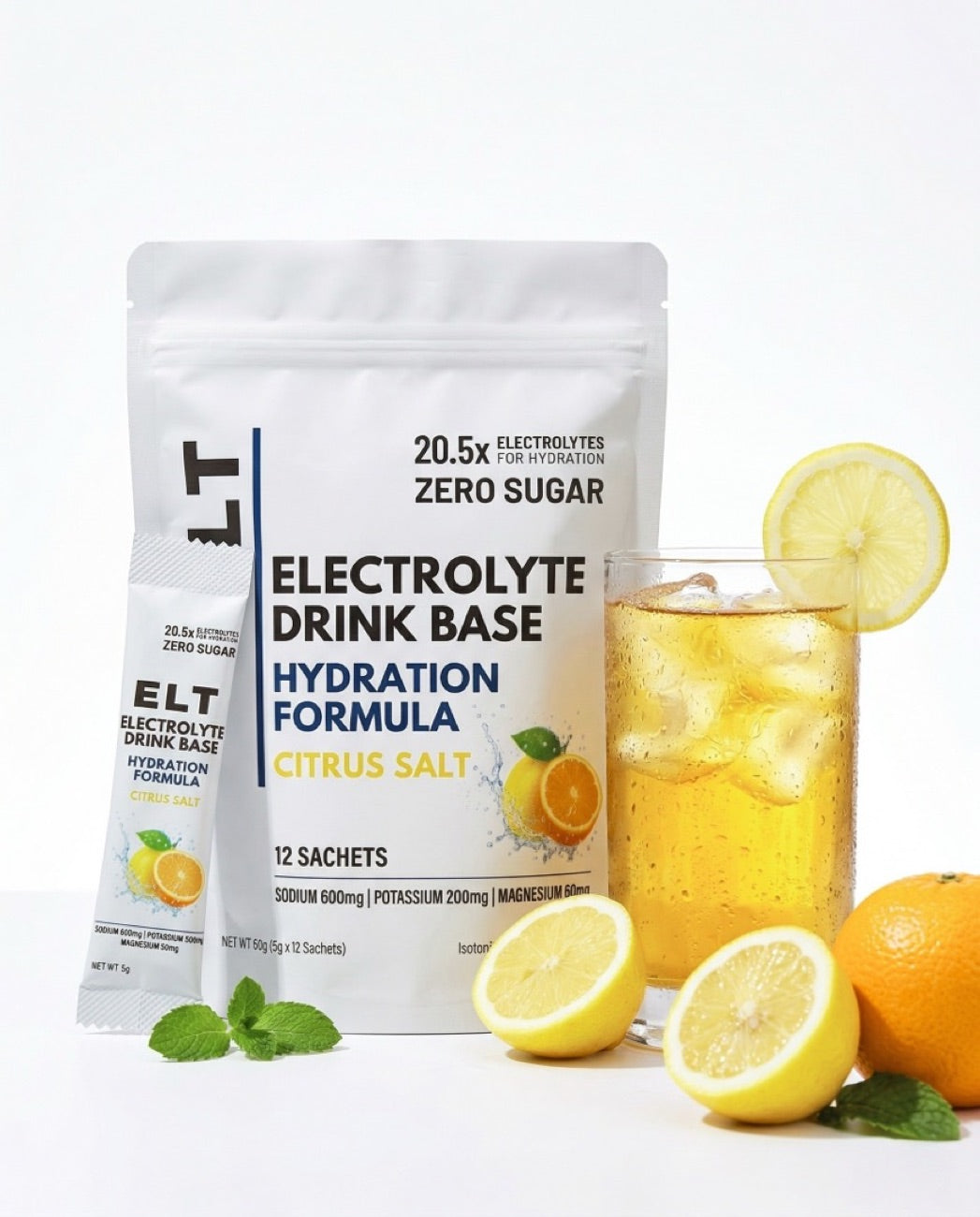
Zero sugar, 600mg sodium per sachet, halal-certified ingredients. Built for daily heat and maintenance-phase keto.
10% off your first pouch with code WelcometoTeamELT.
Week one versus month three
Your needs on keto are not a flat line. They spike, then settle. Week one is the highest need and the most deliberate effort, within whatever limit your doctor has set. By month three you are at steady state: still above a normal diet because insulin is still low, but the induction spike is over. A daily sachet and salted food usually covers it, plus a second serving on hot or training days.
Most people who quit keto quit in week one, with a headache, blaming the diet. Often it was the salt.
Frequently asked questions
What is the best electrolyte for keto in Malaysia?
It depends which phase you are in. For strict induction in the first two weeks, a high-sodium product such as LMNT (around 1,000mg sodium per stick), or simply added salt and broth, suits the higher need better. For maintenance keto, general low carb, or keto in Malaysian heat, a moderate zero-sugar daily sachet like ELT at 600mg sodium works well. Whatever you choose, it needs to be genuinely zero sugar.
Is ELT enough sodium for keto?
For the maintenance phase, usually yes, alongside salted food. For the first one to two weeks of strict adaptation, often not on its own. At 600mg per sachet, ELT is a moderate daily dose, not a keto-adaptation dose. During induction, add salt to food, add clear broth, or use a higher-sodium product for those weeks.
How long does keto flu last?
Reported symptoms typically appear within 2-3 days of starting and resolve within 2-4 weeks, often faster. Replacing sodium and fluid proactively is the most commonly recommended approach, though the research base for specific supplementation amounts during keto initiation is thin.
Can I drink 100Plus or Pocari Sweat on keto?
Not really. A 500ml Pocari Sweat carries about 30g of sugar and a 325ml can of 100Plus Original about 21g, which alone would exceed most people's entire daily carbohydrate allowance on strict keto. The zero versions are carb-safe but light on sodium (around 80mg per can for 100Plus Zero), so they do not solve the actual problem. Our zero-sugar electrolyte guide covers the alternatives.
Why do I get leg cramps at night on keto?
Night cramps are commonly reported during keto initiation, with studies reporting rates from 3% to 37%. Low magnesium and potassium are the usual suspects, and both drop through increased urinary loss combined with the removal of high-potassium foods like bananas, beans and potatoes. Food sources are the most reliable fix, and the evidence linking electrolytes specifically to cramp prevention is weaker than most supplement marketing implies.
Is it safe to add a lot of salt on keto?
For healthy adults with normal blood pressure and kidney function, moderate deliberate sodium increases on keto are generally considered reasonable. Do not assume that applies to you. If you have kidney disease, heart failure, high blood pressure, or you are on a sodium-restricted diet or diuretics, speak to your doctor before increasing sodium at all.
Should I check with a doctor before starting keto?
Yes, and particularly if you take medication. Carbohydrate restriction alongside insulin or other glucose-lowering diabetes drugs can cause dangerously low blood sugar, and doses frequently need adjusting before you start. Blood pressure medication often needs review too, since keto's fluid loss lowers blood pressure on its own.
Is ELT halal and made in Malaysia?
ELT uses halal-certified ingredients, though the finished product is not itself halal certified. It is not made in Malaysia. It is manufactured outside Malaysia under a Malaysian Ministry of Health licence.
Keto is one of the few cases where the electrolyte conversation is not marketing. The mechanism is real and specific: low insulin, less sodium reabsorbed, water and potassium and magnesium out with it. What follows is less dramatic than the internet suggests. Salt your food. Add broth. Drink to thirst rather than to a number. In Malaysian heat, plan for the climate on top of the diet, because nothing written for a temperate country accounts for it.
If you are in week one, a higher-sodium product will serve you better than ours. If you are past that and want something zero sugar to run daily in this heat, that is what we built.
Do your best. We've got you.