Short version. Rehydrating helps with one part of a hangover. It does not fix the rest. Nothing does, except time.
That is a smaller promise than most articles on this topic make. If you searched for an electrolyte for hangover support in Malaysia, you should know what fluid and minerals can and cannot do before you spend money on either.
One note before we start. Plenty of Malaysians do not drink alcohol, and this guide assumes nothing about you. If it does not apply, the hydration sections still hold for any morning you wake up flat.
What a hangover actually is
A hangover is not one thing. It is several processes overlapping, which is why single-ingredient fixes keep failing.
- Inflammation and oxidative stress. Current research reviews point to these as the main drivers of how bad you feel. Alcohol triggers an immune response, and the symptoms you recognise (headache, fatigue, low mood, sensitivity to light and noise) track with that response.
- Alcohol metabolism. Your body breaks ethanol into acetaldehyde, then into acetate. Acetaldehyde is toxic and usually gets blamed for the whole thing, but blood acetaldehyde is typically gone long before the symptoms are. Animal research points at acetate for the headache component.
- Disrupted sleep. Alcohol gets you unconscious quickly, then fragments the second half of the night. You slept, but not usefully. A lot of next-day fog is simply that.
- Gut irritation. Alcohol irritates the stomach lining and changes how fast the stomach empties. Morning nausea is often local, not systemic.
- Low blood sugar. Alcohol interferes with the liver's ability to release glucose. The shaky, weak, hungry feeling often has more to do with blood sugar than with fluid.
- Fluid and electrolyte loss. Real, and the one item on this list you can actually act on.
Look at how much of that list water and minerals do not touch. Electrolytes have nothing to say to inflammation, to acetate, or to a broken night of sleep.
Where dehydration fits, honestly
Alcohol suppresses vasopressin, the hormone that tells your kidneys to hold on to water. Less vasopressin means more urine. You pass out more fluid than you drank, and sodium and potassium leave with it. By morning you are genuinely down on both. Dry mouth, thirst, and a head that hurts more when you stand up are consistent with that.
Here is the part that usually gets left out. Researchers have tested whether drinking water prevents or shortens a hangover, and it does not do much. A 2024 study in the journal Alcohol found that drinking water before bed or the next morning made little difference to hangover severity. Other analyses found no meaningful correlation between dehydration markers, blood electrolyte levels, and how bad people rated their own hangover. The current reading is that dehydration and hangover are two things happening at once, not one causing the other.
So what does rehydrating actually do? It fixes the dehydration. That is not nothing. Thirst, dry mouth, dizziness when you stand, and part of the headache are dehydration sitting on top of the hangover, and those do respond to fluid and sodium. You will feel more functional. You will not be less hungover underneath. Anyone promising more than that is guessing.
That distinction is the whole article. Rehydration is worth doing because it is easy, cheap, and it removes a layer. It is not a fix, and there is no fix.
A practical morning-after timeline
This is the part worth actually doing. Unglamorous, and it works on the parts that can be worked on.
Before you sleep. A glass or two of water, with sodium in it if you have any to hand. Eat something if your stomach will take it. Do not force litres in. You will wake up needing the toilet and sleep worse, and sleep is doing more for you than the water.
On waking. Fluid, slowly. Small sips beat one big glass, especially if you are nauseous. Something with sodium stays in you better than plain water.
First two hours. Eat. Carbohydrate and salt together: porridge, roti canai, plain rice, bak kut teh broth, toast. This addresses low blood sugar, an underrated part of feeling terrible.
Through the morning. Keep sipping. Pale urine by midday is a rough gauge. Go back to sleep if you can. Rest is the only thing that shortens the hangover itself.
If you cannot keep fluid down. Small sips of a pharmacy oral rehydration solution every few minutes, not gulps. If nothing stays down for several hours, see a doctor or clinic.
The Malaysian reflexes, rated fairly
Everyone here has a default. Some of them hold up better than others.
| Option | Sodium | Sugar | Honest verdict |
|---|---|---|---|
| 100 Plus (325ml) | ~80mg | ~21g | Light on sodium, useful glucose. A comfort drink that helps a little. |
| Pharmacy ORS sachet | High, medically balanced | Glucose, on purpose | The best option if you are properly dehydrated. RM 1 to 3. |
| Coconut water (240ml) | ~30 to 50mg | ~9g | Good potassium, very low sodium. Pleasant, not a rehydration workhorse. |
| Plain water | None | None | Necessary. Not sufficient, and does not shorten a hangover. |
| Kopi or teh tarik | Negligible | High in teh tarik | Wakes you up. Does not rehydrate you or help the hangover. |
| ELT (1 sachet) | 600mg | Zero | Strong on sodium. The zero sugar is a genuine trade-off here. See below. |
100 Plus is the national reflex and it is not a silly one. The sugar gives you glucose when your blood sugar is low, and glucose helps your gut absorb sodium and water together. The problem is there is not much sodium in it to absorb. Roughly 80mg per can is a sip of salt, not a replacement dose. We ran the numbers on both Malaysian isotonics in our 100 Plus vs Pocari Sweat comparison.
Coconut water is high in potassium and low in sugar. But sodium is what you lost most of overnight, and coconut water has very little of it.
Which one, for which morning
Properly dehydrated, dizzy, or struggling to keep things down. Pharmacy ORS. Sodium and glucose in the ratio designed for exactly this. A few ringgit, and it beats everything else on this page, ours included.
Shaky, weak, and you have not eaten. Food first. Kopitiam breakfast, bak kut teh, porridge, roti canai. Carbohydrate and salt together do more here than any drink.
Rough but functional, and you want something cold. Water, plus whatever has sodium in it. 100 Plus or coconut water are fine, and neither is doing heavy lifting.
You want the minerals without another 20g of sugar. A zero-sugar electrolyte, alongside breakfast rather than instead of it.
Any of the emergency signs further down. Call 999. Nothing on this list applies.
What is not worth bothering with
- Another drink in the morning. It delays the hangover rather than resolving it, and it is a habit worth being wary of rather than a remedy.
- Sweating it out at the gym. You are already down on fluid and sodium. A hard session in Malaysian humidity takes you further down, not up.
- Coffee as a solution. It makes you alert. It does nothing for the hangover, and on an irritated stomach it can make nausea worse. Have it if you want it.
- Hangover pills and "detox" shots. The evidence for these is thin across the board. Spend the money on breakfast.
- Painkillers, without thinking. Paracetamol and alcohol both load the liver, and anti-inflammatories can irritate an already unhappy stomach. Ask a pharmacist rather than guessing, especially if this is a regular thing.
Drinking less is the only real lever
We are a hydration brand, so it would be convenient to skip this. We are not going to.
The only thing that reliably reduces hangovers is drinking less alcohol. Malaysia's Ministry of Health does not publish a consumer low-risk drinking limit the way some countries do. The widely cited reference points are the UK Chief Medical Officers' guidance of no more than 14 units per week, spread over three or more days, and Australia's guidance of no more than 10 standard drinks per week and no more than 4 on any single day. Both treat alcohol as a risk to be limited, not a target to be hit.
If you are getting hangovers often, that is worth raising with a doctor. Not as a moral matter. Frequent hangovers are a signal about how much you are drinking, and that is medical information about your liver, sleep, and blood pressure.
Alcohol poisoning is an emergency. Call 999 in Malaysia. Do not leave someone to "sleep it off" if you see any of these signs: confusion or inability to rouse them, vomiting that will not stop, slow or irregular breathing, seizures, cold or clammy skin and low body temperature, bluish or pale skin, or unconsciousness. You do not need all of them before you call. If you are unsure, call.
Where ELT fits, and where it does not
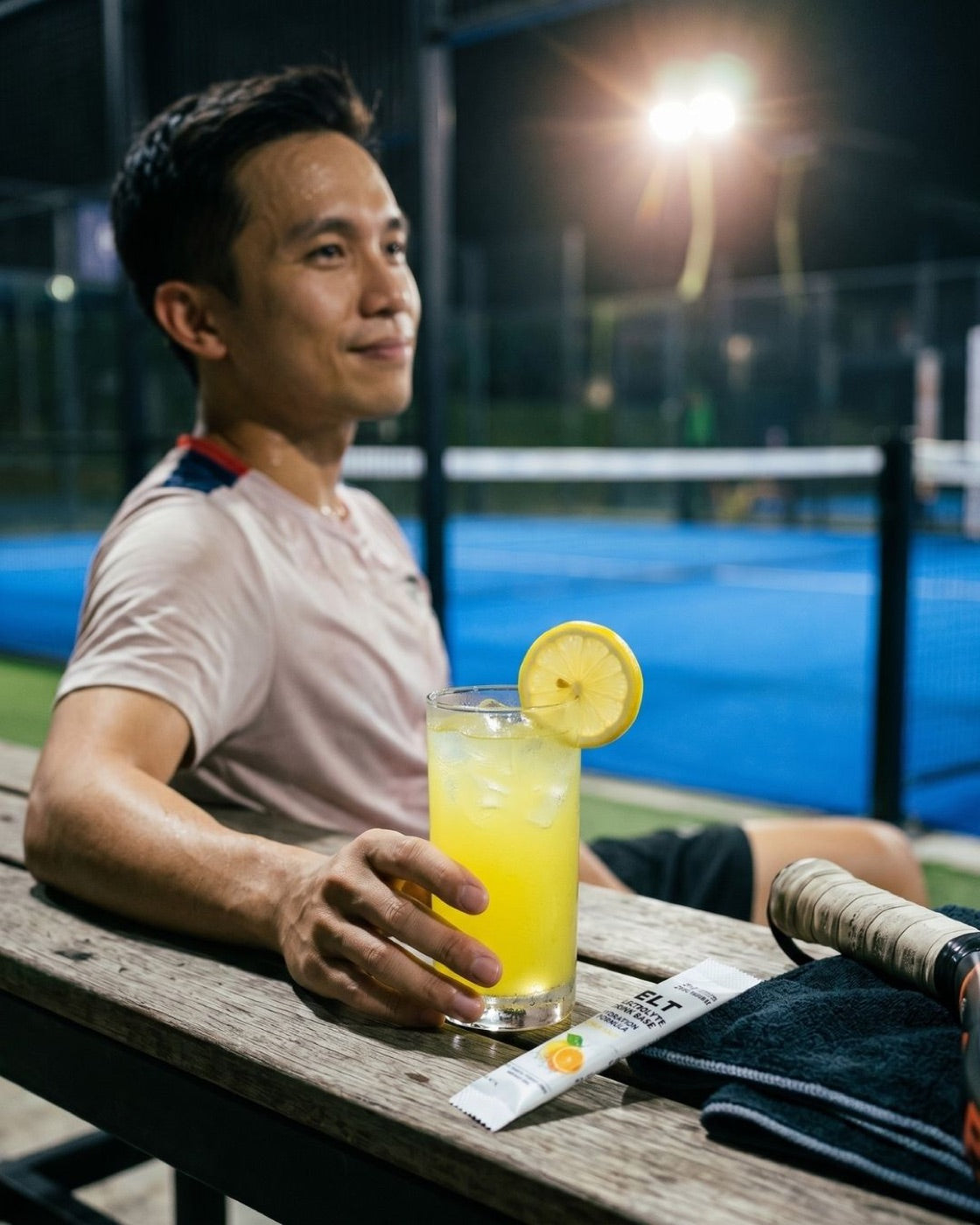
ELT has 600mg sodium, 200mg potassium, 60mg magnesium per sachet, and zero sugar. For daily hydration in this climate the zero sugar is the point, which is the case we make in our guide to daily electrolytes in a tropical climate and our roundup of zero-sugar electrolytes in Malaysia.
The morning after drinking is the one situation where zero sugar is a trade-off rather than an advantage. Glucose helps your gut absorb sodium and water together through a shared transporter, which is exactly why oral rehydration solutions contain it. It also helps with the low blood sugar alcohol leaves behind. ELT gives you the sodium without that assist.
So, plainly. If you are badly dehydrated, buy an ORS sachet. If your blood sugar is on the floor, eat. ELT suits the person who wants a strong sodium dose without another 20g of sugar, and who is going to eat breakfast anyway. That is a real use case, and a narrower one than we could pretend.
Zero sugar, 600mg sodium, halal-certified ingredients. RM 64.80 for 12 sachets, which is RM 5.40 a sachet.
10% off your first pouch with code WelcometoTeamELT.
Frequently asked questions
Do electrolytes help with a hangover?
They help with the dehydration part. Alcohol makes you pass more fluid and sodium than you took in, and replacing both addresses thirst, dry mouth and some of the headache. Research has not found that fluid or electrolytes shorten a hangover or reduce its overall severity, because most of a hangover is inflammation, disrupted sleep and alcohol metabolism. Real help, narrow scope.
Is there anything in Malaysia that gets rid of a hangover?
No. Nothing on any shelf resolves a hangover. Time does. What you can do is rehydrate, eat, rest, and treat symptoms sensibly. Be sceptical of anything sold on a stronger claim.
What is the best drink for a hangover?
For genuine dehydration, an oral rehydration solution from the pharmacy. It carries sodium and glucose in the ratio that moves water into you most efficiently, and it costs a few ringgit. After that: water with food. No premium option beats an ORS sachet at this job.
Does 100 Plus help with a hangover?
A little. The sugar gives you glucose when your blood sugar is low, and it is easy to drink. But a 325ml can carries roughly 80mg of sodium, which is light for replacing what you lost overnight. A comfort drink that helps at the margins, not rehydration.
Is coconut water good for a hangover?
It is pleasant and a good source of potassium, around 400mg per cup. Its weakness is sodium, roughly 30 to 50mg per cup, and sodium is what you lost most of. Good alongside food and water, not a substitute for a proper rehydration drink.
Should I drink electrolytes before bed after drinking?
A glass of water, with sodium if you have it, is reasonable. Do not force down large volumes. You will wake yourself up for the toilet and lose sleep, and sleep is doing more for you than the extra fluid. Studies on drinking water to prevent a hangover have not found a meaningful benefit either way.
Does ELT work for hangovers if it has zero sugar?
It delivers 600mg of sodium with no sugar, so it replaces minerals well. The zero sugar is a genuine trade-off here: glucose helps the gut absorb sodium and water together, and it also helps with low blood sugar after drinking. An ORS or a glucose-containing drink may serve you better the morning after. ELT suits someone who wants the sodium without the sugar and is going to eat breakfast anyway.
When should I see a doctor about hangovers?
If you cannot keep fluids down for several hours, if you get hangovers frequently, or if you are concerned about how much you are drinking. Frequent hangovers are useful medical information, not a character judgement. If someone shows signs of alcohol poisoning (confusion, unresponsiveness, repeated vomiting, slow or irregular breathing, seizures, or low body temperature), call 999 immediately.
A hangover runs on its own schedule. You can take the dehydration layer off the top, feed yourself, and rest. That is a genuinely better morning than doing none of it, and it is the honest limit of what any drink can do.
If the hangovers are becoming a pattern, that is worth a conversation with a doctor rather than a better recovery drink.
Do your best. We've got you.