It is 3am. The baby has been on and off for an hour. You have one arm free and it is the wrong arm. Your water bottle is in the kitchen, and you are not getting up for it. You will drink in the morning.
Except the morning becomes another feed, then the school run for the older one, then a nap you do not want to interrupt. By 2pm you realise you have had one cup of tea since yesterday, in a house sitting at 31°C with the fan on.
That is the real hydration problem for most breastfeeding mothers here. Not the science. The logistics. This guide covers what your fluid needs actually are, what Malaysian heat adds, and how to build a drinking system that does not depend on you remembering anything. We make a daily electrolyte drink (ELT), and we will say plainly where it fits and where it does not. You should be able to finish this article and decide to buy nothing.
Read this part first. Anything clinical belongs with your doctor, your midwife, or a lactation consultant. That includes milk supply concerns, postpartum recovery, medication, and any symptom that worries you. This is general information, not medical advice, and ELT is not a medical or postpartum recovery product.
On sodium specifically. If you have a history of pre-eclampsia, high blood pressure, kidney disease or reduced kidney function, a heart condition, or you have been advised to follow a sodium-restricted or fluid-restricted diet, speak to your doctor before adding any daily sodium product. Bring the label with you. This one is not optional.
How much fluid do you actually need while breastfeeding?
Milk is mostly water, and it leaves your body every day, so your fluid requirement genuinely does go up.
The European Food Safety Authority sets an adequate total water intake for lactating women of about 2.7 litres a day, roughly 700ml above the figure for women who are not breastfeeding. That extra 700ml is derived from the fluid leaving the body as milk. The US Institute of Medicine sets a higher figure, about 3.8 litres a day of total water during lactation.
Both are total water, not glasses of water. They include the moisture in food. Soup, porridge, fruit, rice, sup ayam, teh o. Congee at 4am counts. If you are eating normally, a meaningful share of the target is covered before you pick up a bottle.
Both also assume moderate temperature and activity. EFSA says this explicitly and adds that intake should be higher in heat. Nobody writing those guidelines was picturing Kuala Lumpur in April. Treat 2.7 to 3.8 litres as a temperate-climate baseline.
What the heat adds
KL sits at roughly 27-33°C with 70-90% humidity most of the year. In that range you sweat continuously without noticing, because humidity stops sweat evaporating efficiently, so your body produces more of it. We covered the mechanics in our guide to daily electrolytes in tropical climates.
Postpartum adds two more. Night sweats are common in the weeks after birth as your body sheds the fluid it held during pregnancy, and they arrive at exactly the hour you are least likely to drink anything. Aircon dries you out from the other direction, because it works by pulling humidity out of the air.
So you are producing milk, sweating through the day without registering it, sweating again at night, and breathing dry air in between. The baseline guidance was not written for that.
The honest part: plain water is enough for most mothers
For most breastfeeding mothers eating a normal diet, plain water and food cover it. Malaysian food is not short of sodium. Rice, soup, fruit and vegetables cover potassium reasonably well. The sodium leaving your body in milk is small: breast milk runs at roughly 140mg of sodium per litre in the first six months, so a full day of milk carries about as much sodium as a light pinch of salt.
An electrolyte drink is not a requirement of breastfeeding. It is a convenience and a heat offset. Two situations where it earns its place:
- You are outdoors or sweating a lot. Walking the baby, afternoon errands, an older child at the playground, a job that is not desk-based, or returning to exercise.
- You drink more when a drink has flavour. Not a trivial reason. A mother who finishes a flavoured bottle and skips the plain one is better hydrated. Behaviour beats optimisation.
If neither applies, water and your normal meals are doing the job. Save the money.
What hydration does and does not do for milk
No drink increases milk supply. Not ours, not anyone's. Hydration supports your body's normal function, and severe dehydration is not good for anything, but drinking beyond your thirst has not been shown to raise milk volume. The practical advice from lactation bodies is to drink to thirst, not to a number on a bottle. What drives supply is how often and how effectively milk is removed.
Dehydration is one factor among many, and usually not the main one. Latch, feed frequency, pump fit, medication, thyroid function, and plain exhaustion are all on that list, and none are fixed by a sachet. If you are worried about supply, the person to talk to is a lactation consultant or your doctor, not a hydration article.
The useful framing is narrow and true: stay hydrated because dehydration makes you feel terrible and you have enough going on. Not because a drink will change what your body produces.
Signs of dehydration worth noticing
Mild dehydration is easy to miss postpartum, because every symptom overlaps with "new baby." Patterns worth acting on:
- Dark or strong-smelling urine. The simplest check there is. Pale yellow is the target.
- Dry mouth and lips, especially on waking.
- A headache that builds through the afternoon.
- Feeling lightheaded when you stand up from a feed.
- Constipation despite eating fibre.
- Thirst that arrives suddenly during a letdown. Common, normal, and a useful reminder.
Anything beyond mild belongs with a clinician, the same day. Dizziness that does not pass, a racing heart, confusion, fainting, not passing urine, vomiting or diarrhoea you cannot keep ahead of, or a fever. Several serious postpartum conditions look like dehydration at first. Do not sit at home working out whether you drank enough. Call your doctor or go to the clinic.
A hydration system for someone with no free hands
Advice does not survive a newborn. Systems do. The goal is to make drinking the default rather than something you remember.
1. Put a bottle at every place you feed. Bedside, sofa, nursery chair, dining table. Not one bottle that travels with you. Three or four cheap ones that live where you sit.
2. Drink when the baby drinks. The whole trick. Every feed starts with a few mouthfuls for you. Eight to twelve feeds a day at 150-200ml each gets you most of the way there with no reminder.
3. Use a straw bottle or sports cap. One-handed, no tilting, no spilling on a sleeping baby. A tumbler is a two-hand object and you do not have two hands.
4. Pre-fill at two fixed times. Morning and before bed, fill everything. The 3am version of you will not walk to the kitchen, so the 10pm version has to.
5. Keep the nappy bag stocked. A 500ml bottle and a snack with salt in it. The afternoon out is when hydration usually collapses.
6. Check urine colour once a day. Pale yellow, you are fine. Dark, drink now.
If you do only one, do number two. Drinking when the baby drinks solves the memory problem permanently.
Pantang and the warm-drink tradition
Most Malaysian mothers go through some version of confinement: Malay pantang, Chinese zuo yue zi, Indian traditions, and family versions of all three. A common thread is warm or hot drinks rather than cold, often herbal, and in some households a reduced overall fluid intake.
The warm-drink part does not conflict with hydration at all. Warm water hydrates exactly as well as cold, and herbal drinks, barley water and soups all count toward your total. If your confinement lady prefers everything warm, keep a thermos at each feeding station instead of a cold bottle. Most electrolyte powders, ours included, dissolve in warm water as readily as cold.
The part worth raising with your doctor or midwife is any practice that restricts fluid meaningfully, especially in hot weather while feeding. Confinement traditions carry real knowledge about rest, warmth and support, and we are not going to dismiss them. But the fluid question is one to ask about rather than assume.
When water is enough, when a heat offset helps, when to call someone
Plain water is enough. Mostly indoors, normal meals, pale urine, no long stretches outdoors or training. Keep bottles everywhere, drink when the baby drinks. Nothing to buy.
A heat offset may help. You are outdoors regularly, sweating through your clothes, back to training, in a home without aircon in the hottest months, or you drink more when a drink has flavour. A zero-sugar electrolyte drink once a day is a reasonable convenience: a top-up alongside food, not a replacement for water or meals.
Call a clinician. Supply concerns of any kind. Dizziness, fainting, a racing heart, confusion, fever, or not passing urine. Symptoms that do not improve after you drink. And a history of pre-eclampsia, high blood pressure, kidney disease, or a sodium-restricted diet, before you add any daily sodium product.
What to look at on the label
Sodium per serving. This is the number your doctor will care about. Products range from about 80mg in a can of isotonic to 1,000mg in a high-sodium sport stick.
Sugar. Many drinks marketed for hydration carry a full day's sugar allowance in one bottle. We broke that down in our 100Plus and Pocari Sweat sugar comparison.
Sweetener type. Stevia, sucralose, acesulfame-K, or sugar. Worth knowing which you are drinking daily, and worth asking your clinician about if you have any concern regarding lactation. We are not going to make a safety pronouncement about sweeteners while you are breastfeeding. That is a conversation for you and your doctor, with the label in front of you.
Halal status. Read this precisely, because brands blur it. A product can have halal-certified ingredients without the finished product holding halal certification. Different claims.
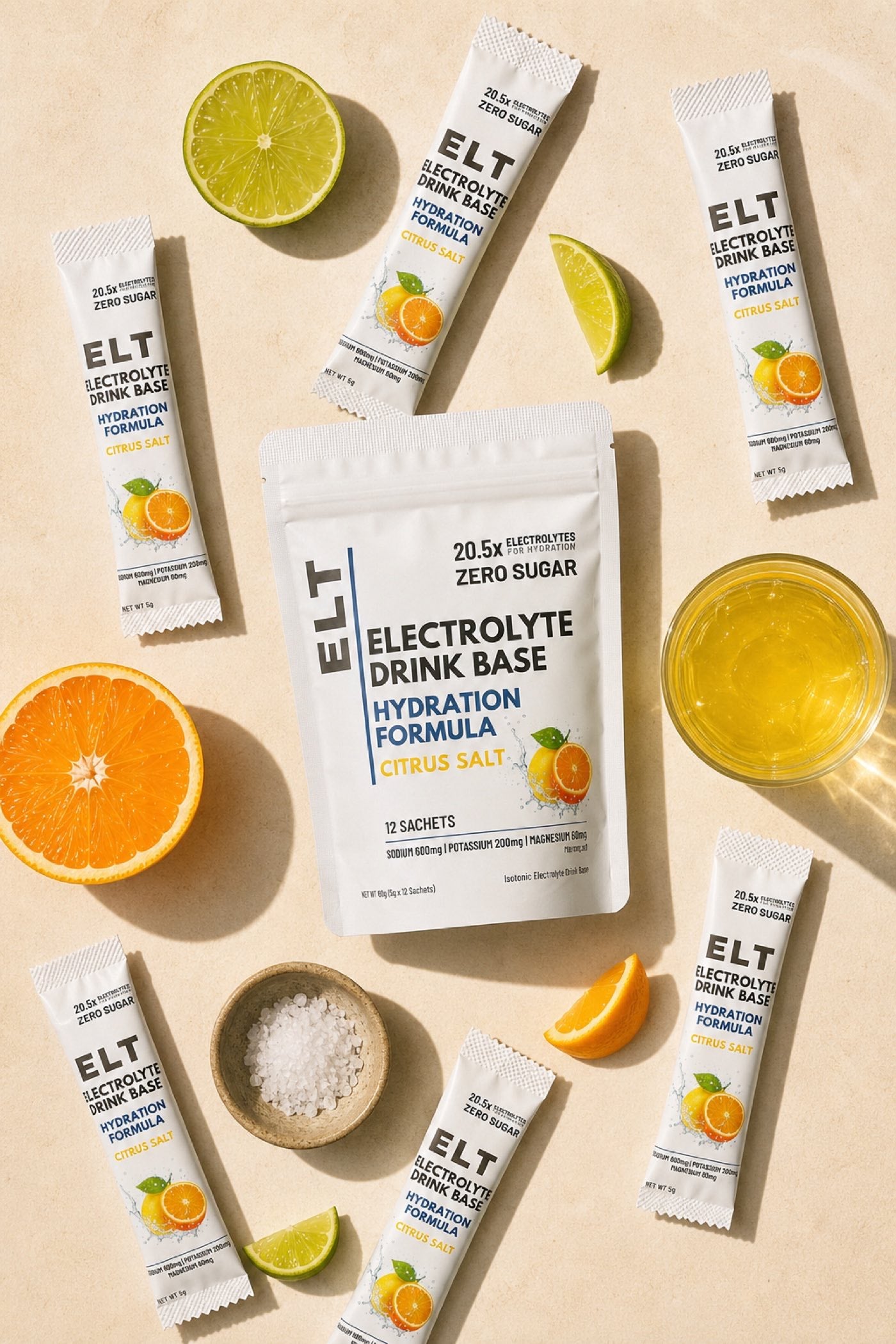
For ELT, plainly: 600mg sodium, 200mg potassium, 60mg magnesium per sachet. Zero sugar, sweetened with stevia. The ingredients are halal-certified. The finished product is not halal certified, and we will not describe it as if it were. It is manufactured outside Malaysia under a Malaysian Ministry of Health licence, so it is not Malaysian-made either. RM 64.80 for a pouch of 12 sachets, or RM 5.40 a serving. Returns cover damage, defects or a wrong order only, with no money-back guarantee, so if you are unsure, buy one pouch and not three. For the wider category, see our best zero-sugar electrolyte guide for Malaysia.
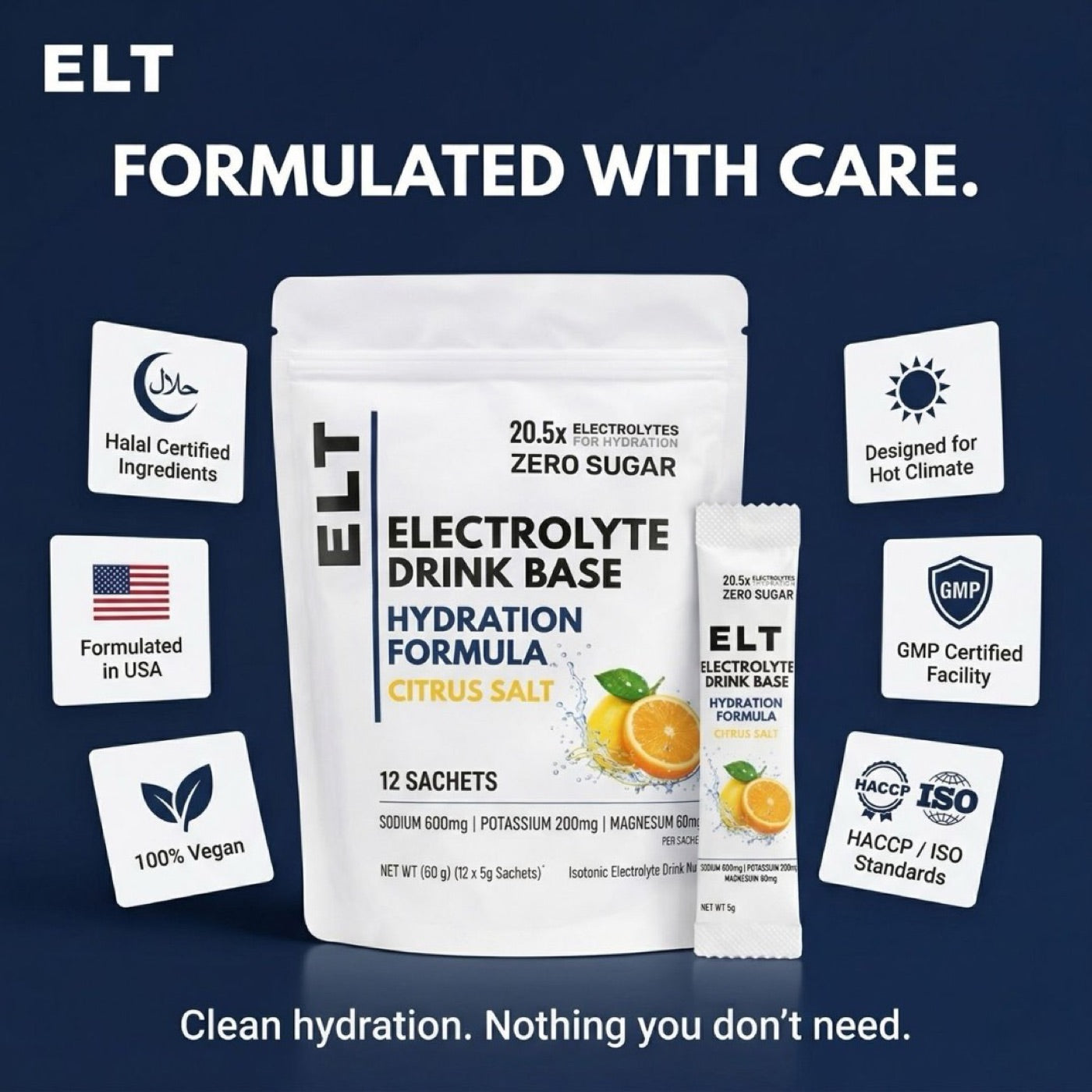
If you have read the caution above, checked with your doctor if any of it applies to you, and you want a zero-sugar option for the hot days, this is ours. One sachet a day, 600mg sodium, no sugar. A convenience, not a necessity. Water is still the foundation.
10% off your first pouch with code WelcometoTeamELT.
Frequently asked questions
How much water should I drink while breastfeeding in Malaysia?
Published guidance puts total water intake for breastfeeding women at about 2.7 litres a day (European Food Safety Authority) to 3.8 litres a day (US Institute of Medicine), including the moisture in food. Both assume moderate temperature and activity, and EFSA notes intake should be higher in heat, so in Malaysian conditions treat them as a floor rather than a target. The simplest daily check is urine colour: pale yellow means you are doing fine.
Is an electrolyte drink safe while breastfeeding?
For most healthy mothers, a standard daily serving alongside a normal diet is a small addition to what food already provides. But this is a question for your doctor, midwife, or lactation consultant rather than a brand, and you should ask before you start. You must speak to a doctor first if you have a history of pre-eclampsia, high blood pressure, kidney disease or reduced kidney function, a heart condition, or if you have been advised to limit sodium or fluid. Take the label to the appointment.
Will drinking electrolytes increase my milk supply?
No. No drink increases milk supply, ours included. Hydration supports your body's normal function, but drinking beyond thirst has not been shown to raise milk volume, and dehydration is only one of many factors that affect supply. What drives supply is how often and how effectively milk is removed. If you have any concern about supply, see a lactation consultant or your doctor.
What are the signs of dehydration while breastfeeding?
Mild signs include dark or strong-smelling urine, dry mouth, an afternoon headache, feeling lightheaded when standing, and constipation. Sudden sharp thirst during letdown is normal. Anything more than mild needs a clinician the same day: dizziness that does not pass, a racing heart, confusion, fainting, fever, vomiting or diarrhoea you cannot keep up with, or not passing urine. Several serious postpartum conditions resemble dehydration early on, so do not diagnose yourself.
Can I drink electrolytes during confinement (pantang)?
Warm drinks are entirely compatible with hydration, and most electrolyte powders dissolve in warm water as easily as cold, so a thermos works as well as a bottle. If your confinement practice involves restricting fluid, raise that with your doctor or midwife, particularly in hot weather while breastfeeding. Ask rather than assume, in either direction.
Is ELT halal certified?
ELT's ingredients are halal-certified. The finished product does not hold halal certification, and we will not describe it as halal certified. If full product certification is a requirement for you, that distinction matters and you should choose accordingly.
What is in ELT, where is it made, and what does it cost?
Each sachet contains 600mg sodium, 200mg potassium and 60mg magnesium, with zero sugar, sweetened with stevia. It is manufactured outside Malaysia under a Malaysian Ministry of Health licence, so it is a Malaysian brand rather than a Malaysian-made product. A pouch of 12 sachets is RM 64.80, which is RM 5.40 per serving. Returns cover damage, defects or a wrong order only.
Most of what matters here is not a product. It is a bottle at every place you sit, a few mouthfuls at the start of every feed, and one glance at urine colour a day. That covers the majority of breastfeeding mothers in this climate, and it costs nothing.
An electrolyte drink sits on top of that, useful mainly when heat or activity pushes losses up. It is not medicine, it does not change your milk, and it is not a substitute for asking a clinician the questions that belong to a clinician. Drink when the baby drinks. Do your best. We've got you.