Five years ago, searching for electrolyte powder in Malaysia got you two results: a pharmacy ORS sachet for diarrhoea, and a tub of sport powder from a cycling shop. Today the same search returns imported sticks on Shopee at RM 13 a serving, effervescent tubes at Decathlon, a growing shelf at Watsons, and a dozen local brands that did not exist in 2023.
They look similar in a thumbnail. They are not similar at all. One is a medicine for real dehydration. One is 35 grams of carbohydrate built to fuel a two-hour ride. One is a daily habit. Buying the wrong one is not dangerous, but it wastes money and usually leaves the original problem unsolved.
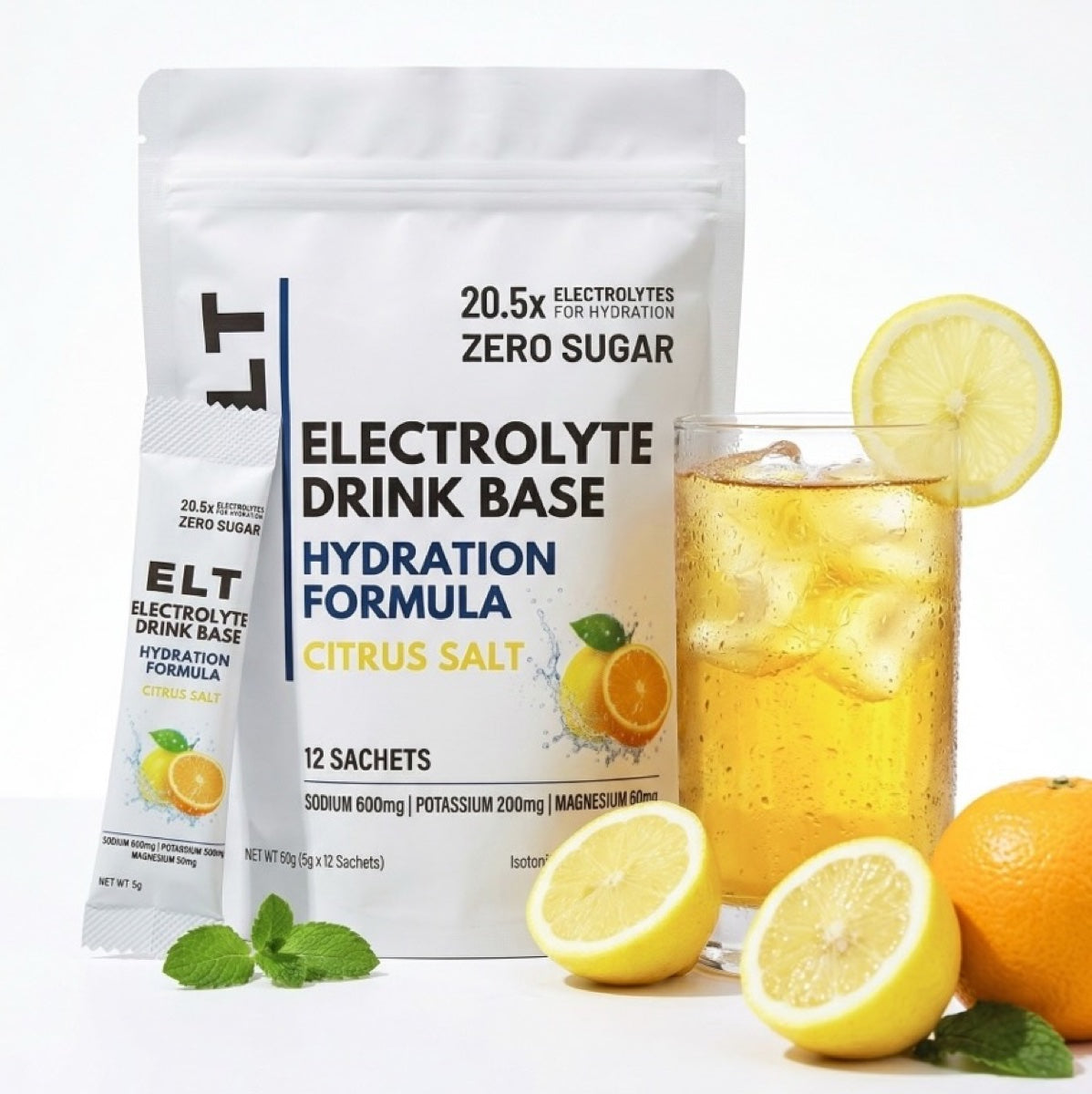
This guide covers the whole category: the formats, how to read the label, what each costs per serving in ringgit, where to buy it, and when the honest answer is plain water. We make one of these products (ELT, a zero-sugar daily powder), and we will say where it fits and where it does not.
What electrolyte powder actually is
Electrolytes are minerals that carry an electrical charge in your body fluid. Three matter in a drink: sodium, potassium and magnesium. Sodium is the one you lose most heavily in sweat, by a wide margin. Potassium comes second. Magnesium is a distant third, and most people get enough from food.
Electrolyte powder is those minerals in dry form, usually with a flavour and a sweetener, mixed into water by you. That is the only structural difference between a powder and a can of 100Plus. The powder gives you control over concentration and skips the cost of shipping water around the country. The can gives you cold liquid with no effort.
What it is not: a substitute for water. You still drink the water. The powder changes what is in the water so your body holds onto more of it.
The one number that decides everything: sodium per serving. Under 150mg is a flavoured rinse. 200 to 350mg is a light top-up, where most sport tablets and pharmacy ORS sit. 400 to 700mg is genuine daily replacement in a hot climate. Above 900mg is a specialist dose for keto, fasting, or multi-hour endurance. Every other number matters less. If a product does not print sodium per serving anywhere on the pack, that is usually because the number is small.
The five formats you will find in Malaysia
1. Pharmacy ORS (oral rehydration salts)
The cheapest and the most medically serious option here. Oralite, ORS Plus, Uphalyte and the generic hospital sachets all follow the World Health Organization low-osmolarity formula: 75 mmol of sodium and 20 mmol of potassium per litre, with 75 mmol of glucose. The glucose is not flavour. Sodium and glucose are absorbed together through the gut wall, and that co-transport is the whole mechanism. Malaysian sachets are usually mixed into 200ml, not a litre, so you get a small strong glass rather than a bottle.
Price: Oralite is about RM 4.10 for 5 sachets, ORS Plus about RM 4.60 for 5. Roughly RM 0.80 to RM 0.95 a serving, cheaper than anything else in this guide.
Buy this if: you have diarrhoea, food poisoning, vomiting, heat exhaustion, or a child losing fluid. This is the correct product for real dehydration and no daily powder beats it there. Keep a box in the house.
Do not buy this if: you want something to drink every day. It contains glucose, the flavour is medicinal, and it is formulated for illness.
2. Sugar-containing sport powders
Fuel first, hydration second. Decathlon's Aptonia ISO powder is the clearest example on Malaysian shelves: one 38g sachet into 500ml of water gives about 293mg of sodium and about 34.7g of carbohydrate, at RM 10 per box of five (RM 2 a serving). Pocari Sweat's powder sachets are the same idea from a household brand. The carbohydrate is the point: if you are riding 60km or playing three hours under the sun, you need calories as well as salt, and drinking them is easier than eating them.
Buy this if: you are doing sustained endurance work past roughly 90 minutes and want fuel and salt in one bottle. It is also the cheapest per serving of any powder that is not ORS.
Do not buy this if: you are at a desk. 34.7g of carbohydrate is more sugar equivalent than a can of Coke. We ran the same arithmetic on the ready-to-drink versions in 100Plus vs Pocari Sweat: sugar content compared.
3. Effervescent tablets
Not technically powder, but they compete for the same purchase. High5 Zero, Nuun, Hammer Endurolytes Fizz and Koda's tubes all work the same way: drop one tablet into 500 to 750ml of water and wait for it to stop fizzing.
Two honest trade-offs. Dissolve time: most tablets need one to three minutes, longer in cold water, where a powder sachet is gone in seconds. And dose: tablets usually land around 200 to 250mg of sodium each, so you need two or three to match one daily-format sachet.
Buy this if: you want something that survives a gym bag or jersey pocket, and you are topping up during activity rather than replacing a full day's losses.
4. Daily-format zero-sugar powders
The newest category here and the fastest growing. Single-serve sachets or sticks, no sugar, sodium in the 400 to 1,000mg range, built to drink every day rather than only on sport days. What is available locally:
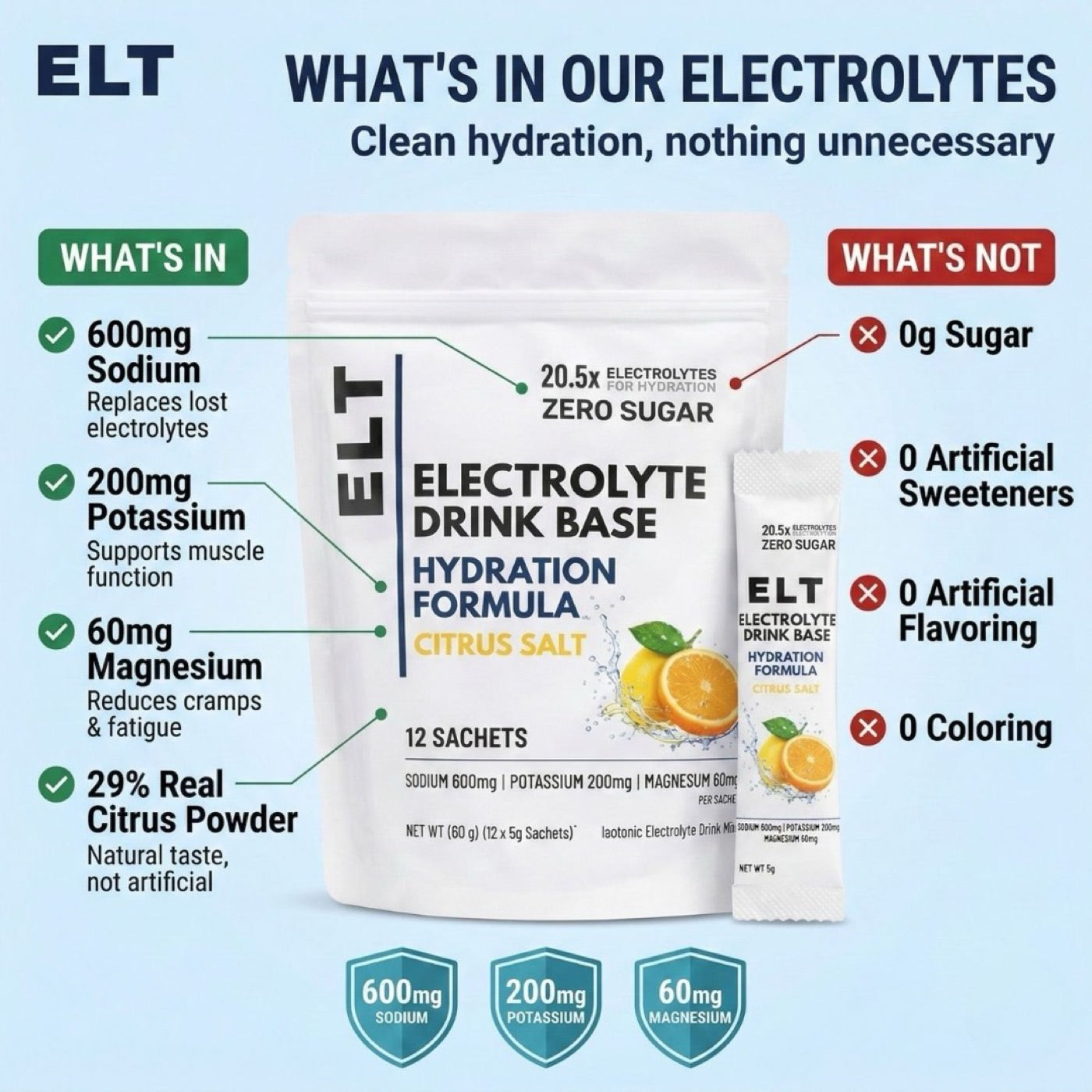
- ELT (what we make): 600mg sodium, 200mg potassium, 60mg magnesium, zero sugar, sweetened with stevia, citrus salt flavour. RM 64.80 for a pouch of 12 sachets.
- Koda Nutrition: around 430mg sodium, 36mg potassium, 20mg magnesium per powder sachet, sugar-free, made in Australia. Roughly RM 7 a sachet through Malaysian sports retailers.
- LMNT: 1,000mg sodium, 200mg potassium, 60mg magnesium, stevia. Not officially distributed here, so it arrives through Shopee and parallel importers at roughly RM 11 to RM 13 a stick. More detail in our LMNT in Malaysia guide.
- Liquid I.V.: the original Hydration Multiplier is about 500mg sodium and 380mg potassium, but carries about 11g of added sugar per stick, so it is not a zero-sugar product. A separate sugar-free version exists. Import maths in the Liquid I.V. alternative guide.
If you want the zero-sugar shortlist specifically, with the side-by-side on sweeteners and flavour, that lives in our zero-sugar buyer's guide.
5. Ready-to-drink cans and bottles
Not powder, but the baseline everything else gets measured against. 100Plus Zero is about 80mg of sodium per 325ml can at roughly RM 1.80 to RM 2.50. Pocari Sweat is about 245mg of sodium per 500ml bottle with around 30g of sugar. 100Plus is much lighter on electrolytes than its branding suggests, and Pocari is a real isotonic you pay for in sugar. Both are fine occasionally. Neither is an efficient way to replace a day of sweating here.
How to read the label
Sodium. The number to check first. One caution on units: some labels print salt rather than sodium. Salt (sodium chloride) is about 40% sodium by weight, so 1.5g of salt is about 600mg of sodium. If a label talks in grams of salt, convert before comparing.
Potassium. Useful, secondary. Sweat contains far less potassium than sodium, and Malaysian diets are generally not short of it. Anything in the 150 to 400mg range is reasonable. High potassium with low sodium has its priorities backwards for a hot climate.
Magnesium. Nice to have, rarely load-bearing. 50 to 100mg is sensible. Most people meet their magnesium needs through food, so be a little skeptical when a brand's whole pitch rests on it.
Sugar. Read this as fuel, not as a flaw. Sugar in an endurance powder is doing a job. Sugar in a drink you have at your desk is not. Check grams per serving, not per 100ml.
Sweetener. Zero-sugar products use stevia (plant-derived), sucralose, acesulfame-K, or a blend. All are approved as safe at typical intake by the FDA, EFSA and WHO. Some people report mild bloating on daily long-term artificial sweetener use, and gut bacteria research is ongoing. For something you drink daily for a year, plant-derived sweeteners carry fewer open questions. A minority taste stevia as bitter, which is a real preference worth testing with one sachet.
Flavour source. "Natural flavours" is an industry catch-all that can mean almost anything. Real fruit powder is listed as fruit powder, with a percentage. Not a health claim, but it tells you how the product was built.
Price per serving in Malaysia
Sticker price on a box tells you little, because serving counts differ. Price per serving is the number that matters. Figures are mid-2026 Malaysian retail and will move.
| Product | Format | Sodium | Sugar | Price per serving |
|---|---|---|---|---|
| Pharmacy ORS (Oralite, ORS Plus) | 200ml sachet | WHO formula, low-osmolarity | Glucose, by design | RM 0.80 – 0.95 |
| 100Plus Zero | 325ml can | ~80mg | 0g | RM 1.80 – 2.50 |
| Decathlon Aptonia ISO powder | 38g sachet, 500ml | ~293mg | ~34.7g carbohydrate | RM 2.00 |
| ELT Citrus Salt | Sachet, 500ml | 600mg | 0g | RM 5.40 |
| Koda Nutrition powder | Sachet | ~430mg | 0g | ~RM 7.00 |
| LMNT (parallel import) | Stick | 1,000mg | 0g | RM 11 – 13 |
Two things worth noticing. Pharmacy ORS is dramatically cheaper than everything else, which is a good argument for keeping a box on hand for the job it was designed for. And imported sticks cost two to three times the local daily powders, mostly because you are paying to fly a box of salt across the Pacific.
How much, and when
Dosing is simpler than the marketing suggests. Most people need one serving on most days. The rest is timing.
Step 1. Mix it properly. One sachet into 400 to 600ml of water. Less water makes it salty and harder to finish. More makes it taste like nothing, which is fine if you prefer that.
Step 2. Morning is the default slot. You wake up mildly down on fluid after eight hours without any. A serving with or before breakfast covers that, and you are not trying to remember it at 4pm.
Step 3. Add a second serving only when the day earns it. An hour of real sweating, a long stretch outdoors, a football or padel session, a market run in afternoon sun. If your shirt is wet, you lost salt.
Step 4. Keep drinking plain water around it. One serving does not replace two litres of water. It makes the water work better. The powder is the seasoning, not the meal.
Step 5. Drop to half a sachet if it tastes too salty. Taste is a rough but real signal. If a drink you normally enjoy suddenly tastes unpleasantly salty, you probably did not need it that day.
For the climate-specific version, including why Malaysian sweat losses run higher than guidance written for temperate countries, see daily electrolytes in a tropical climate.
Which format for which person
You are sick, or someone at home is. Diarrhoea, vomiting, food poisoning, heat exhaustion. Buy pharmacy ORS. RM 0.90 a sachet, medically correct formula, and no daily powder beats it here. If symptoms are severe or last more than a couple of days, see a doctor rather than a drink.
You work in air-conditioning, drive to work, and exercise twice a week. Plain water covers most of your days. A daily powder is a reasonable habit, not a necessity. Add a sachet on the days you are actually outdoors or training.
You sweat most days: outdoor work, a hot kitchen, a motorbike commute, training after work. A daily-format zero-sugar powder in the 400 to 700mg sodium range. This is the case ELT was built for.
You do endurance sessions past 90 minutes. You need carbohydrate as well as salt. A sugar-containing sport powder or gels, plus water. Zero-sugar powders do not fuel you.
You are on keto, fasting regularly, or doing multi-hour work in serious heat. Higher sodium than the daily range. LMNT sits at 1,000mg per stick for exactly this, and it is worth the import cost if that is genuinely your situation.
You forgot your bottle and want something cold right now. 100Plus Zero. Light dose, but two ringgit and already cold.
If the daily-sweat row is you, ELT is our version of it: 600mg sodium, 200mg potassium, 60mg magnesium, zero sugar, stevia-sweetened, halal-certified ingredients. RM 64.80 for 12 sachets. Not the cheapest powder here, not the highest dose. The one we built to drink every day in this heat.
10% off your first pouch with code WelcometoTeamELT.
Where to buy electrolyte powder in Malaysia
- Pharmacies (Guardian, Watsons, Caring, independents). Reliable for ORS sachets, which sit near digestive care rather than sports nutrition. Watsons Malaysia now carries at least one powdered isotonic sachet alongside the cans, but the daily-format zero-sugar category is still thin on pharmacy shelves as of late 2026.
- Decathlon. The most consistent physical shelf for sport powders and tablets. Aptonia is the house brand and the cheapest powder per serving that is not ORS.
- Shopee and Lazada. Widest selection, most variable. Local brands sell direct. Imported LMNT, Liquid I.V. and DripDrop come through third-party sellers at import pricing. Check expiry dates and seller ratings.
- Brand websites. Usually the best price per serving for local brands, with no marketplace commission in the middle. ELT ships from a warehouse near KL, so orders arrive in days.
- Specialty sports retailers. Cycling and running shops carry Koda, High5 and Hammer. Good for tablets and endurance formulas.
- 7-Eleven and kedai runcit. Cans and bottles only. No powder yet, in our experience.
When you do not need any of this
- A sedentary day in air-conditioning. If you walked from the car park to the lift and back, water is enough. You did not lose the sodium you would be replacing.
- A 30-minute session in a cool gym. Water. The losses are small and your next meal covers them.
- You already eat a salty diet and feel fine. Malaysian food is not short of sodium. Powder helps when losses outpace intake, which is a sweat question, not a diet question.
- You want an energy fix. Electrolytes are not caffeine and not calories. If you are tired at 3pm because you slept five hours, no sachet fixes that.
The category has a real use case and has been oversold well past it. Hydration support in a hot climate is the honest claim. Be careful with anything beyond that.
Frequently asked questions
What is the best electrolyte powder in Malaysia?
It depends on the job. For illness and real dehydration, pharmacy ORS (Oralite, ORS Plus) at around RM 0.90 a sachet is the correct product and nothing else beats it. For endurance sessions past 90 minutes, a sugar-containing sport powder such as Decathlon's Aptonia ISO gives fuel as well as salt. For daily hydration in the heat, a zero-sugar daily-format powder in the 400 to 700mg sodium range, which includes ELT (600mg) and Koda (around 430mg). For keto or multi-hour heat exposure, higher-sodium imports such as LMNT at 1,000mg per stick.
How much does electrolyte powder cost in Malaysia?
Per serving, mid-2026 Malaysian retail: pharmacy ORS RM 0.80 to RM 0.95, Decathlon Aptonia ISO powder about RM 2.00, ELT RM 5.40 (RM 64.80 for a 12-sachet pouch), Koda Nutrition around RM 7.00 a sachet, parallel-imported LMNT RM 11 to RM 13 a stick. Compare price per serving, not the price on the box, because serving counts differ a lot between brands.
Where can I buy electrolyte powder in Malaysia?
Pharmacies (Guardian, Watsons, Caring) stock ORS sachets reliably. Decathlon stocks sport powders and tablets. Shopee and Lazada carry the widest range, including local brands and parallel-imported LMNT, Liquid I.V. and DripDrop. Local brand websites usually offer the best price per serving. Cycling and running shops carry Koda, High5 and Hammer. Convenience stores and kedai runcit stock cans and bottles, not powder.
Is electrolyte powder better than 100Plus?
For electrolyte replacement, yes, by a wide margin. A 325ml can of 100Plus Zero contains about 80mg of sodium. A daily-format sachet contains 400 to 1,000mg, roughly five to twelve times as much, for a few ringgit more. 100Plus is genuinely convenient and genuinely cold, which is worth something at a petrol station. It is not an efficient way to replace a day of sweating in Malaysian heat.
Can I drink electrolyte powder every day?
For most healthy adults, yes, if the product is formulated for daily use (zero sugar, sodium in the 400 to 700mg range). Sodium and potassium are essential minerals you replace daily through food and fluid anyway. Two situations warrant a doctor's input first: kidney disease, where sodium load matters more, and blood pressure medication that interacts with sodium intake. Pregnancy and breastfeeding also change electrolyte needs. Very high sodium products (around 1,000mg a serving) are situational top-ups, not a daily default.
What is the difference between ORS and electrolyte powder?
ORS (oral rehydration salts) follows the World Health Organization low-osmolarity formula: 75 mmol sodium and 20 mmol potassium per litre with 75 mmol glucose, at 245 mOsm/L total osmolarity. The glucose is functional, because sodium and glucose are absorbed together through the gut wall. ORS treats fluid loss from diarrhoea, vomiting and heat exhaustion. General electrolyte powder targets sweat replacement and daily hydration: usually more sodium per glass, no glucose in the zero-sugar versions, and a flavour built to drink regularly rather than during illness.
Is electrolyte powder halal in Malaysia?
It varies by product, so check each one. Some carry JAKIM halal certification on the finished product. Others, including ELT, use halal-certified ingredients without the finished product itself holding halal certification. Those are different claims. If certification of the finished product matters to you, look for the certification mark and the certifying body rather than an ingredient statement.
The short version. Keep pharmacy ORS at home for illness, because it is under a ringgit and it is the right tool. Use a sugar-containing sport powder when you need the fuel. Use a zero-sugar daily powder if you sweat most days and want hydration to be a routine rather than a rescue. Drink plain water the rest of the time, which is most of the time.
If you play, the between-sets version is in electrolytes for padel in Malaysia.
Do your best. We've got you.