Short answer first. Most people do not need an electrolyte drink every day. If you work in an air-conditioned office, walk between the car park and the lift, eat normal Malaysian food, and drink water when you are thirsty, plain water is almost certainly enough. You can stop reading here and keep your money.
That is also what the major health bodies say, and they are not wrong. Mayo Clinic's position is that for most people plain water is best, and that a balanced diet with fruit, vegetables, whole grains and adequate fluid keeps electrolyte levels where they should be. Cleveland Clinic says much the same: water gets the job done in most cases, and electrolyte drinks earn their place around exercise lasting more than an hour or at high intensity.
We sell a daily electrolyte product. We are telling you this anyway, because the alternative is pretending everyone in Malaysia is one sachet away from feeling better, and that is not true.
What is also true is that the mainstream advice was written for a specific person: someone in a temperate country, in a 22°C room, whose sweat losses are genuinely small. If you live in Kuala Lumpur, Johor Bahru or Kuching, you are not that person. That does not flip the answer to yes. It changes which questions you should ask.
If you want the physiology of tropical hydration in depth, our guide to daily electrolytes in tropical climates covers the mechanism. This one is about whether it applies to you.
What the mainstream advice assumes
The "water is enough" position rests on four assumptions. Seeing them written out is how you check whether they describe your life.
- Your daily fluid loss is modest, roughly 1.5 to 2 litres.
- Most of that loss is urine and breathing, not sweat.
- Your food supplies enough sodium, potassium and magnesium.
- Your exercise is moderate and mostly indoors.
For a desk worker in Manchester, all four hold. For one in Bangsar who takes the LRT and plays badminton twice a week, the first two are shakier. The third deserves a closer look, and it does not go the way you might expect.
The inconvenient fact: Malaysians already eat a lot of sodium
The Malaysian Community Salt Survey (MyCoSS), run by the Ministry of Health using 24-hour urine collection, found the average Malaysian adult consumes about 3,167 mg of sodium per day. The World Health Organization recommends staying under 2,000 mg. The average person here already eats roughly 60% more sodium than the WHO target, before adding anything.
Take that seriously. If you are a low-sweat, indoor, sedentary adult eating typical Malaysian food, you are not sodium deficient. Adding a 600 mg sachet is not filling a gap. It is making a high number higher.
If you have high blood pressure, kidney disease, heart failure, or you have been told to limit salt, talk to your doctor before adding any daily sodium product. This is not a formality. A daily electrolyte sachet adds a meaningful amount of sodium to your intake, and for these conditions sodium load is exactly the thing being managed. The same applies if you are pregnant, breastfeeding, or taking diuretics or blood pressure medication. Your doctor knows your numbers. We do not.
So what actually changes in a tropical climate?
Three things, and only three. Everything else is noise.
1. Sweat volume is higher, and it is higher year round
Kuala Lumpur sits around 27-33°C with 70-90% humidity, almost every day. High humidity is the specific problem: sweat cools you by evaporating, and when the air is already near saturation it evaporates poorly. Your body responds by sweating more. You lose more fluid for less cooling benefit.
The seasonal point matters as much as the temperature. A runner in Seoul has a hot-weather hydration strategy for about three months a year. Here there is no off season.
2. Sweat carries sodium, and how much varies enormously between people
Published measurements put sweat sodium roughly in the range of 10 to 90 mmol per litre, which works out to about 230 mg to 2,070 mg of sodium per litre of sweat. A study of marathon runners found an average around 43 mmol/L with individual values spanning 7 to 95 mmol/L.
That is close to a tenfold spread between two people doing the same session in the same conditions. It is the strongest argument against any brand telling you what your requirement is. Nobody writing an article can know where in that range you sit. You can get a clue: if your dark shirts dry with white salt rings and your face stings when sweat runs into your eyes, you are probably on the salty end.
3. Exercise stacks on top of an already warm baseline
An evening padel match at 7pm in KL is not the same session as the same match in a temperate autumn. You start warmer, you sweat sooner, and you sweat more for the same effort. This is where electrolytes stop being a lifestyle question and become a performance question. If you cramp during or after these sessions, our article on whether electrolytes help muscle cramps covers what the evidence does and does not support.
The counterargument we are obliged to make: you are heat acclimatised
Here is the strongest point against our own product, and hydration brands rarely raise it.
Living in the heat changes your sweat. Heat acclimatisation increases your sweat gland's sensitivity to aldosterone, the hormone that drives sodium reabsorption. One controlled study found sweat sodium concentration fell by around 50% over ten days of heat acclimation. Your body gets better at holding on to salt precisely because it sweats a lot.
The practical implication is real. A tourist arriving in KL from Sweden may lose considerably more sodium per litre of sweat than you do, even though you both sweat buckets. The naive argument, "it is hot here, therefore everyone needs more salt," is too simple.
What acclimatisation does not do is reduce sweat volume. It lowers the concentration, not the litres. Someone losing four litres of sweat across a working day on a construction site is still losing a substantial amount of sodium even at a low concentration.
An honest self-assessment
Rather than guessing, run through this. Count the ones that are true of a normal week for you.
Step 1. Count your sweat hours. How many hours a week are you actually sweating? Outdoor work, training, commuting on a motorbike, walking in the afternoon sun. Not "being warm." Sweating.
Step 2. Check the salt ring test. After a hard session, does your shirt dry with visible white marks? Does sweat sting your eyes badly? Both suggest higher sweat sodium.
Step 3. Look at your urine. Pale straw colour through the day is the simplest adequacy signal there is. Consistently dark yellow means you are under-drinking water, which is a water problem, not an electrolyte problem.
Step 4. Count your recurring symptoms. Afternoon crashes that coffee does not fix, night cramps, headaches after long hot days. Every one of these has many possible causes.
Step 5. Audit your food. Do you eat vegetables and fruit most days, or mostly rice, noodles and protein? This affects potassium and magnesium far more than sodium.
Step 6. Check the medical list. High blood pressure, kidney disease, heart failure, pregnancy, breastfeeding, sodium-restricted diet, diuretics. If any apply, the answer is "ask your doctor," regardless of steps 1 to 5.
The decision
You probably do not need daily electrolytes if: you work indoors in aircon, you sweat less than about two hours a week, your urine is pale through the day, you have no recurring cramps or afternoon crashes, and you eat a reasonable mix of food. Plain water and normal meals cover you. Keep one sachet or an ORS packet in the cupboard for sick days or a rare long hike. That is a sensible amount to own.
It is worth testing if: you train three or four times a week including outdoors or in a non-airconditioned hall, you get occasional cramps or a reliable late-afternoon slump, or your diet is light on vegetables and fruit. You will not know from reading. Run a short trial and judge it on how you feel.
It is most likely to help if: you work outdoors or ride for a living, you train five or more times a week in heat, you sweat visibly for several hours most days, you follow a low-carb or fasting protocol where sodium losses rise, or you have confirmed you are a salty sweater. Here the daily loss is large enough that food timing alone often does not keep up.
Ask a doctor first, in every case, if: you have hypertension, kidney disease, heart failure, are on diuretics or blood pressure medication, or are pregnant or breastfeeding.
Where the evidence is thin, and we should say so
We can be specific about what is well established and what is not.
Well established: sweat contains sodium; sweat sodium concentration varies widely between individuals; heat acclimatisation lowers sweat sodium; significant dehydration impairs physical and cognitive performance; drinking large volumes of plain water during prolonged exertion without any sodium can cause exercise-associated hyponatremia, which is a genuine medical emergency documented in ultramarathon and Ironman fields.
Not well established: that a healthy, adequately fed adult in a hot climate feels or performs measurably better from a daily electrolyte sachet than from water and food alone. There is no good trial of that specific question in a tropical general population. Anyone claiming otherwise is extrapolating from athlete studies, or from testimonials, which are not the same thing.
Also worth saying: a lot of what people attribute to electrolytes is simply drinking more fluid. If a sachet makes you drink an extra 500ml because it tastes like something, the benefit may be the 500ml.
Nothing in this article is a treatment, prevention or cure for any condition. Persistent cramps, dizziness, confusion, a racing heart or nausea in heat are signs to stop, cool down, and see a doctor, not to drink another sachet.
If you want to test it, here is how to do it properly
Give it seven days. Keep everything else the same. Take it at the same time each day, ideally in the morning before the day's losses start. Write down two things: your energy in the late afternoon, and whether you cramped.
Then decide. If nothing changed, hydration was not your bottleneck and you should stop. That is a useful result, not a failure. If something clearly changed, you have your answer.
The sugar question matters for a daily habit in a way it does not for an occasional sports drink. A 500ml bottle of regular isotonic drink carries roughly 30g of sugar, fine once after a match and poor as a daily routine. We compared the local options in 100Plus vs Pocari Sweat on sugar, and the wider category in our zero-sugar electrolyte buyer's guide for Malaysia. Pharmacy ORS sachets at RM 1 to 3 are a perfectly reasonable way to run the test.
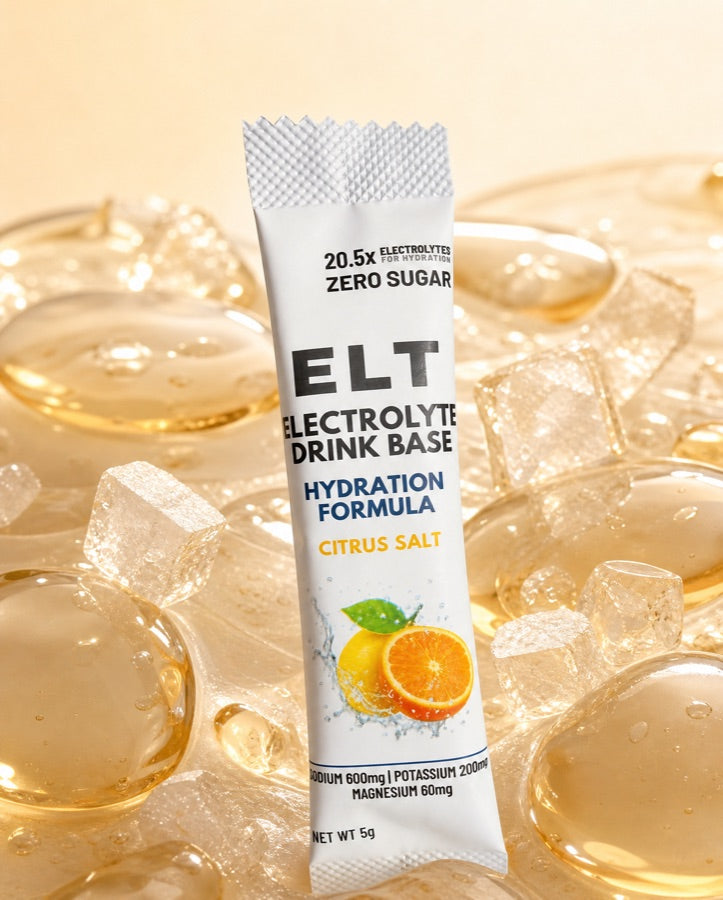
If you landed in the "worth testing" or "likely to help" group and want a zero-sugar daily format, this is what we make. One ELT sachet is 600mg sodium, 200mg potassium and 60mg magnesium, with halal-certified ingredients. RM 64.80 for a pouch of 12, which is RM 5.40 a serving. Manufactured outside Malaysia under a Malaysian Ministry of Health licence. If the self-assessment put you in the "probably do not need it" group, we would rather you skipped it.
10% off your first pouch with code WelcometoTeamELT.
Frequently asked questions
Do I need electrolytes daily?
Most people do not. If you work indoors in air-conditioning, sweat for less than about two hours a week, and eat a normal mixed diet, plain water is enough. That is the position taken by Mayo Clinic and Cleveland Clinic. Daily electrolytes become genuinely useful when sweat losses are large and sustained: outdoor work, training five or more times a week in heat, or a job that keeps you sweating for hours. The deciding variable is sweat hours, not climate on its own.
Do I need electrolytes daily in Malaysia just because it is hot?
Not automatically. Malaysia's heat raises sweat volume year round, but two things offset it. First, the average Malaysian adult already consumes about 3,167 mg of sodium per day according to the Ministry of Health's MyCoSS survey, well above the WHO's 2,000 mg recommendation. Second, people living in the heat are heat acclimatised, and acclimatisation reduces sweat sodium concentration by roughly half over about ten days. A sedentary person in aircon in KL is not in a sodium deficit.
Are electrolyte drinks necessary, or is it marketing?
Both, at once. Electrolyte replacement is a real, well documented need during prolonged or intense sweating, and drinking only plain water through hours of exertion can cause exercise-associated hyponatremia, a dangerous drop in blood sodium seen in endurance events. But the marketing extends that genuine need to people who do not have it. If your longest sweat of the week is the walk from the car park, the category is not solving a problem you have.
Can I take electrolytes every day safely?
For a healthy adult with normal kidney function, a single daily sachet at typical doses sits well within safe intake ranges. The important exceptions are not optional: if you have high blood pressure, kidney disease, heart failure, are on diuretics or blood pressure medication, are on a sodium-restricted diet, or are pregnant or breastfeeding, speak to your doctor before starting. A daily sodium product is exactly the kind of thing those conditions require managing.
How much sodium does a daily electrolyte sachet actually add?
Products range from around 200 mg to 1,000 mg of sodium per serving. ELT is 600 mg. If you are an average Malaysian adult at roughly 3,167 mg per day, a 600 mg sachet takes you to about 3,767 mg. Whether that is sensible depends on how much you are sweating out. Sweating for hours a day, it is a partial replacement. In aircon all day, it is just a higher number.
How do I know if I am a salty sweater?
Sweat sodium varies close to tenfold between individuals, roughly 230 mg to 2,070 mg per litre, and it is not predictable from body size or fitness. The practical home signals: white salt rings on dark clothing after it dries, sweat that stings your eyes noticeably, a salty taste on your skin. None are precise. A sweat test at a sports lab is the only accurate method, and for most people it is not worth the cost.
Will electrolytes stop my night cramps?
Possibly, but do not count on it and do not treat it as a medical fix. The evidence linking electrolyte intake to cramp reduction is mixed rather than settled, and cramps have several causes including fatigue, neuromuscular factors, medication and underlying conditions. Trying it for a week is reasonable. Persistent or severe cramping should be looked at by a doctor rather than managed with a drink.
Is water alone ever a problem in the heat?
Yes, but only in a narrow situation: drinking large volumes of plain water over several hours of heavy sweating, faster than your kidneys can clear it. That is the setup for exercise-associated hyponatremia, well documented in ultramarathons and long triathlons. For an hour in the gym or a normal day at work, plain water is safe and sufficient. This risk is not a reason for a sedentary person to buy electrolytes.
What is the cheapest way to test whether this helps me?
Pharmacy oral rehydration salts, at roughly RM 1 to 3 per sachet in Malaysia. They are formulated for rehydration, cheap, and taste flat, which is fine for a one week test. Drink one a day for seven days, keep everything else constant, and note your late afternoon energy and any cramps. If nothing changes, you have your answer without buying a branded product.
The useful version of this question is not "do electrolytes work." It is "am I one of the people losing enough to need replacing."
For a lot of readers the answer is no, and the right move is to drink water more consistently and spend the money elsewhere. For people working outside, training hard in the heat, or sweating for hours most days, the answer is more often yes.
Either way, decide it from your own week, not from an advert. Drink your water. See a doctor about symptoms that persist. Do your best. We've got you.