There is no shortage of lists telling you which electrolyte drink to buy. There is a shortage of people teaching you how to tell for yourself.
That matters more here than it does elsewhere. The Malaysian shelf is a mix of local isotonics, Japanese imports, Australian sport tabs, American powders bought through parallel-import sellers on Shopee, and a growing number of brands that appeared in the last two years. Formulations change. Flavours get reformulated. A list written in January can be out of date by June.
A method does not go out of date. So this guide is built the other way round: first the four-step check that lets you disqualify most products in about thirty seconds while standing in a Watsons aisle, then the short list of what actually survives it in Malaysia in 2026.
We make one of the products on that list. We will say clearly where it wins and where it does not. If you want a straight product-by-product comparison instead, we have one: our zero sugar electrolyte buyer's guide sorts the whole Malaysian market into three categories and compares them side by side. This piece is about the skill, not the shortlist.
Why the front of the pack is the least useful part
"Zero sugar." "No added sugar." "Less sugar." "Light." These are not synonyms, and under Malaysian labelling rules they are held to genuinely different standards.
Under the Food Regulations 1985 and the Health Ministry's guide to nutrition claims:
- "Sugar free" requires less than 0.5g of sugars per 100ml of liquid. That is a real, checkable threshold.
- "No added sugar" only means no sugars were added during manufacturing. Sugar that arrives inside an ingredient, such as fruit concentrate, still counts as sugar in your glass. A product can carry this claim and still deliver a meaningful sugar load.
- "Reduced sugar" or "less sugar" requires roughly a 25% reduction against a reference product. Twenty five percent less than a very sugary drink is still a sugary drink.
None of this is deceptive. It is all legal, disclosed, and sitting in the nutrition panel on the back. It just means the front of the pack answers a narrower question than most shoppers think it does.
The habit worth building: stop reading the front of the pack as a verdict and start reading it as a hint. The verdict is on the back, in the nutrition panel, in the ingredient list, and in the serving size. Thirty seconds of reading beats any listicle, including this one.
The four-step label check
This works on a can at 7-Eleven, a sachet on Shopee, or a tub at Guardian. The order matters, because each step disqualifies products faster than the one after it.
Step 1. Find the sugars line, not the sugar claim. Turn the pack over. In the nutrition panel, look under "Carbohydrate" for the sub-line "of which sugars" (sometimes "Total sugars"). That is the only number that matters for sugar. If it reads 0g or under 0.5g per serving, the product passes. If it reads 5g, 7g, or 11g, you now know what you are actually holding, regardless of what the front said.
Step 2. Check what a "serving" means. Ready-to-drink bottles in Malaysia are very often labelled per 100ml, not per bottle. A panel showing 6g of sugar per 100ml on a 500ml bottle is 30g of sugar in your hand. Multiply before you judge. Powders are usually labelled per sachet, which is simpler, but check whether a "serving" is one sachet or half of one.
Step 3. Read the sodium, then place it in a band. Sodium is the electrolyte you lose most in sweat and the one most products underdose. Ignore the percentage Daily Value column, which is calibrated to limit intake rather than to guide replacement. Read the milligram figure and put it in one of the four bands in the table below.
Step 4. Read the sweetener in the ingredient list and ask one question. Not "is this safe." It almost certainly is. The question is: would I be comfortable drinking this specific sweetener every day for a year? That is a personal answer, and it is the right one to make consciously rather than by accident.
Step 3 in detail: the sodium bands
This is where most of the useful sorting happens, because sugar content is increasingly a solved problem and sodium is not. Roughly, per serving:
| Band | Sodium per serving | What it actually does | Typical products |
|---|---|---|---|
| Rinse | Under 150mg | Flavoured water with a trace of minerals. Fine as a drink, not a replacement. | 100Plus Zero (~80mg per 325ml can), Ultima Replenisher (55mg) |
| Light | 150-350mg | Useful mid-session top-up. You will usually want more than one. | Nuun Sport (300mg), most effervescent sport tabs, Pocari Ion Water |
| Daily replacement | 400-700mg | Enough to matter on a hot, sweaty Malaysian day. Repeatable without overdoing it. | ELT (600mg), Koda Nutrition (~430mg), Liquid I.V. Sugar-Free (~530mg) |
| High output | 800mg and up | Built for long endurance efforts, keto, or heavy sweat loss. More than most people need daily. | LMNT (1,000mg) |
Figures are per serving as listed by manufacturers in 2026. Formulations get revised, so treat these as a map rather than a guarantee and check the current pack.
None of these bands is wrong. They are answers to different questions. The mistake is not picking the wrong band, it is not knowing which band you picked. A lot of people believe they are drinking a replacement dose when the panel says rinse.
One honest note about our own number. ELT sits at 600mg, in the middle of the daily replacement band. That is a deliberate choice for people doing long humid days rather than four-hour rides, and it means we are genuinely not the right pick at the top of the range. We go into why in our guide to daily electrolytes in a tropical climate.
Step 4 in detail: sweeteners, without the scare story
Zero sugar means something replaced the sugar. In Malaysia you will encounter five:
- Sucralose and acesulfame-K are artificial sweeteners. Both are approved as safe at typical intakes by the FDA, EFSA, and WHO, with decades of use. 100Plus Zero uses both.
- Stevia is extracted from the leaf of the stevia plant. Also approved, also widely used. A small share of people taste it as slightly bitter, which is a genuine preference rather than a defect.
- Monk fruit is a plant extract with a rounder finish than stevia. Less common locally, and usually more expensive.
- Allulose is a rare sugar that behaves like sugar in the mouth but contributes almost no calories. Liquid I.V.'s Sugar-Free line uses it.
We want to be careful here, because this is the part of the category where marketing gets loudest. There is no regulator anywhere telling healthy adults to avoid approved sweeteners. Anyone selling you fear about sucralose is selling you something.
What is true is narrower. Some people report mild bloating or digestive discomfort with daily long-term artificial sweetener use. Research into effects on gut bacteria is ongoing and not settled in either direction. And a clear consumer preference has emerged across Asia for plant-derived sweeteners in products people drink every single day.
Our position, stated plainly: ELT is sweetened with stevia. We chose it because a meaningful share of our drinkers told us they wanted a plant-derived sweetener in a daily habit, not because sucralose is dangerous. It is not. If you prefer how sucralose tastes, a sucralose-sweetened product is a reasonable thing to drink.
Applying the check to what is actually on Malaysian shelves
Run the four steps across the products you are most likely to encounter here, and the field sorts itself quickly.
| Product | Sugars | Sodium | Sweetener | Verdict |
|---|---|---|---|---|
| ELT (citrus salt sachet) | 0g | 600mg | Stevia | Passes. Daily replacement band. |
| Koda Nutrition (powder / tablet) | 0g | ~430mg | Stevia | Passes. Lower end of daily replacement. |
| LMNT (imported) | 0g | 1,000mg | Stevia | Passes on sugar. High output band, situational. |
| Liquid I.V. Sugar-Free | 0g | ~530mg | Allulose | Passes. Note this is the Sugar-Free line only. |
| Liquid I.V. (original Hydration Multiplier) | ~11g | ~500mg | Cane sugar + dextrose | Fails step 1. Good sodium, real sugar. |
| DripDrop ORS | ~7g | ~330mg | Sugar + stevia | Fails step 1 by design. It is an ORS. |
| Nuun Sport | ~1g | 300mg | Stevia | Passes step 1. Light band, so plan on more than one. |
| Ultima Replenisher | 0g | 55mg | Stevia | Passes step 1, fails step 3. Rinse band. |
| 100Plus Zero | 0g | ~80mg per can | Sucralose + ace-K | Passes step 1, rinse band. Convenience, not replacement. |
Two results are worth sitting with.
Liquid I.V. is the clearest illustration of why the method beats the brand. The original Hydration Multiplier carries about 11g of sugar per stick, because the sugar is functional in that formula. The Sugar-Free line is a different product with a different sweetener system. Same brand, opposite answer to the question you are asking. Step 1 catches that instantly. Reputation does not.
Ultima passes the sugar test and fails the useful test. Zero sugar, clean stevia, 55mg of sodium. It is a pleasant low-mineral drink. If you bought it expecting sweat replacement after an hour of futsal, the panel would have told you otherwise in five seconds.
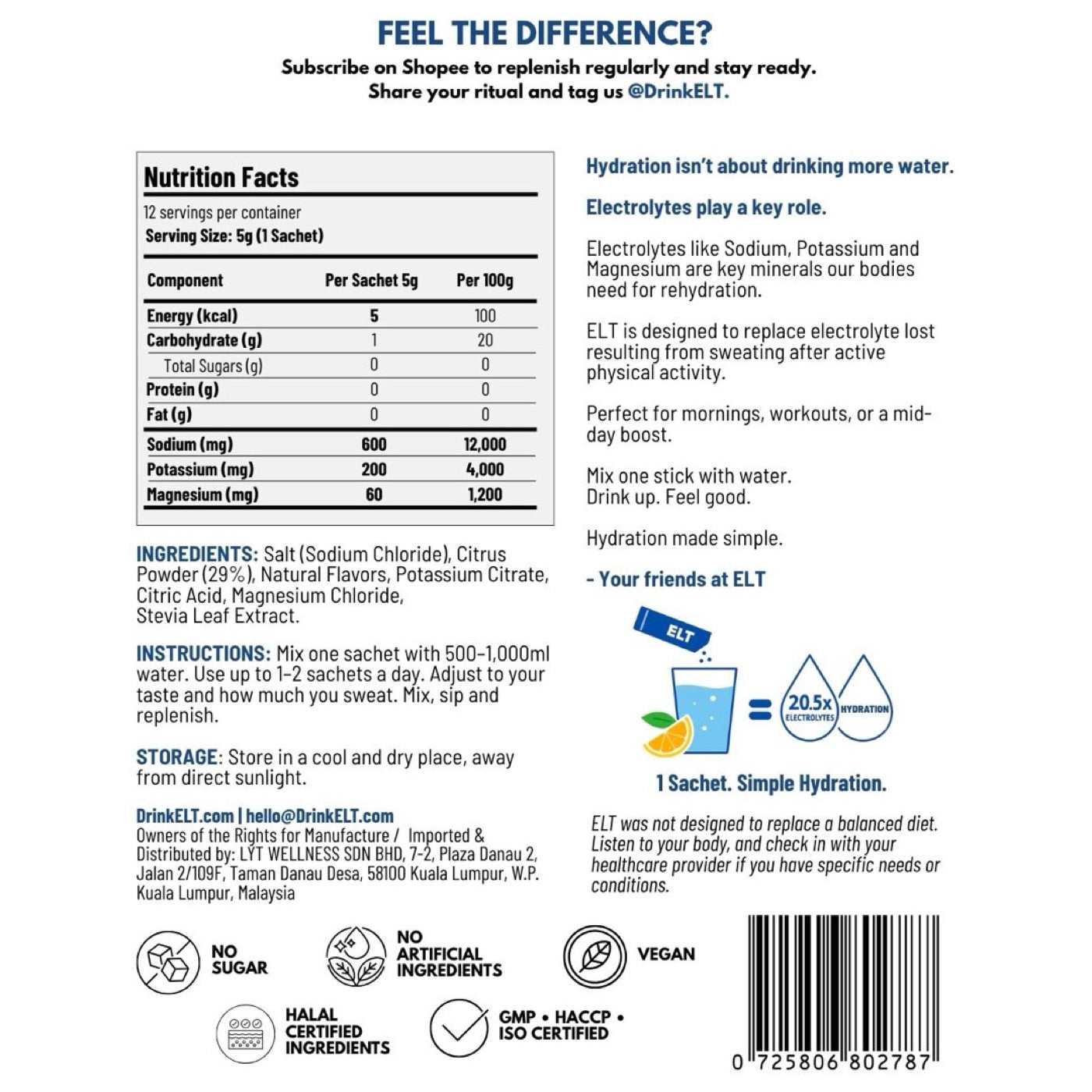
If you ran the check and landed on the daily replacement band with a plant-derived sweetener, that is the box we built ELT to fit. 600mg sodium, 200mg potassium, 60mg magnesium, zero sugar, stevia, halal-certified ingredients. RM 64.80 for 12 sachets, which is RM 5.40 a serving. Manufactured outside Malaysia under a Malaysian Ministry of Health licence, shipped from near KL.
10% off your first pouch with code WelcometoTeamELT.
Which one for which person
You work normal hours in KL or PJ, train a few times a week, and want one repeatable habit. Daily replacement band, 400-700mg sodium, whichever sweetener you prefer. ELT or Koda both fit. This is the most common answer by a distance.
You are mid-session and topping up between bottles. Light band. A sport tab like Nuun dissolved into 500ml is designed for exactly this, and the lower dose is a feature when you are drinking three of them across a long morning.
You are doing an ultra, a long ride in full sun, or you are on keto. High output band. LMNT is the obvious pick and we would genuinely point you there over our own product. Expect to pay import pricing on Shopee or Ubuy. We compare the two formulas honestly in our LMNT alternative guide for Malaysia.
You are ill, recovering from food poisoning, or badly dehydrated. Pharmacy ORS. A few ringgit a sachet at any Watsons or Guardian, formulated with a specific glucose-to-sodium ratio for fluid absorption, and the sugar in it is doing a job. This is not the moment for a zero-sugar product. Do not use this article to talk yourself out of a pharmacy.
You forgot your bottle and you are already at the counter. 100Plus Zero is fine. It is cold, it is about RM 2.50 at a kedai runcit, and it is a better default than a sugary isotonic. Just know it is a rinse, not a replacement.
You sat in aircon all day and barely moved. Water. You did not lose enough to replace. A sugar-free electrolyte will not harm you, but it is solving a problem you did not have that day.
What the label check will not tell you
Three things sit outside the panel, and it is worth knowing where the method stops.
Taste. No number predicts whether you will finish the glass, and a product you do not enjoy is a product you stop drinking by week three. Buy one pack before you buy three.
Flavour source. The panel will not distinguish real fruit powder from "natural flavours," which is a catch-all term that discloses very little. The ingredient list will, if you read it carefully.
Total daily intake. A single serving figure tells you nothing about the rest of your day. Malaysian diets already run higher in sodium than the global average, so stacking a high-output sachet on top of a salty diet is a real consideration, particularly if you have high blood pressure or kidney concerns. Talk to a doctor rather than to a nutrition panel.
If sugar is your main concern rather than minerals, the comparison worth reading next is 100Plus versus Pocari Sweat on sugar content, which runs the same arithmetic across the isotonics most Malaysians actually drink.
Frequently asked questions
What is the best electrolyte without sugar in Malaysia?
For daily use, a zero-sugar powder in the 400-700mg sodium range is the best fit for most people. ELT (600mg sodium, 200mg potassium, 60mg magnesium, zero sugar, stevia, RM 64.80 for 12 sachets) and Koda Nutrition (around 430mg sodium) are the two most accessible options in Malaysia. For long endurance efforts or keto, imported LMNT at 1,000mg sodium is better suited. For illness recovery, pharmacy ORS is the correct choice even though it contains sugar.
Does "no added sugar" mean the drink is sugar free?
No. Under Malaysia's Food Regulations 1985, "no added sugar" only means no sugars were added during manufacturing. Sugar arriving through an ingredient such as fruit concentrate still counts and still appears in your glass. "Sugar free" is the stricter claim, requiring less than 0.5g of sugars per 100ml. Always check the "of which sugars" line in the nutrition panel rather than relying on the front of the pack.
Is 100Plus Zero a good sugar-free electrolyte?
It is genuinely sugar free and fine as an occasional cold drink, but it carries roughly 80mg of sodium per 325ml can. That is a rinse-level dose, not sweat replacement. It is sweetened with sucralose and acesulfame-K, both approved as safe. Treat it as convenience at the petrol station rather than as your daily electrolyte source.
Are sugar-free electrolyte drinks safe to drink every day?
For most healthy adults, yes. Sodium, potassium, and magnesium are essential minerals you replace daily through food and fluid anyway, and approved sweeteners are considered safe at typical intakes by the FDA, EFSA, and WHO. Two situations warrant a doctor's input first: kidney disease, where sodium load matters more, and blood pressure medication that interacts with sodium. Pregnancy and breastfeeding can also change electrolyte needs.
How much sodium should a daily electrolyte drink have?
For daily use in a hot, humid climate, 400-700mg per serving is a practical range. Below roughly 150mg the drink is flavoured water with trace minerals. Between 150-350mg it works as a mid-session top-up, usually requiring more than one serving. Above 800mg is built for endurance events, keto diets, or heavy sweat loss, and is more than most people need as a daily habit.
Is stevia better than sucralose in an electrolyte drink?
Neither is unsafe. Both are approved by the FDA, EFSA, and WHO at typical intakes. Sucralose is artificial and tastes closer to sugar for most people. Stevia is extracted from a plant leaf and is what a growing share of Asian consumers choose for products they drink daily, partly because some people report mild digestive discomfort with long-term artificial sweetener use and research on gut effects is unsettled. A small share of people taste stevia as bitter. Taste preference is a legitimate deciding factor here.
Where can I buy sugar-free electrolyte powder in Malaysia?
ELT sells direct at drinkelt.com and on Shopee, shipping from near KL. Koda Nutrition is available through Malaysian sports nutrition retailers and cycling shops. Imported brands such as LMNT, DripDrop, and Liquid I.V. are carried by third-party sellers on Shopee and Lazada, plus Ubuy and iHerb, at import pricing. Watsons and Guardian stock ready-to-drink isotonics and pharmacy ORS, but not daily-format electrolyte powders as of 2026.
The four steps take about thirty seconds once you have done them a few times. Sugars line. Serving size. Sodium band. Sweetener.
Run them on whatever you are holding, including our pouch. If the answer comes out as something other than ELT for the day you are actually having, that is the method working. We would rather you buy the right thing than buy ours.
Do your best. We've got you.